10.29.12

Sandy Truly A Superstorm Of  Epic Proportions

Posted in Commentary, Hurricane Intensity, Hurricane Records, Tracking the Tropics, Model Forecasts at 11:46 pm by gmachos

Hurricane/Nor’easter Makes Mark Comparable To Superstorm ‘93

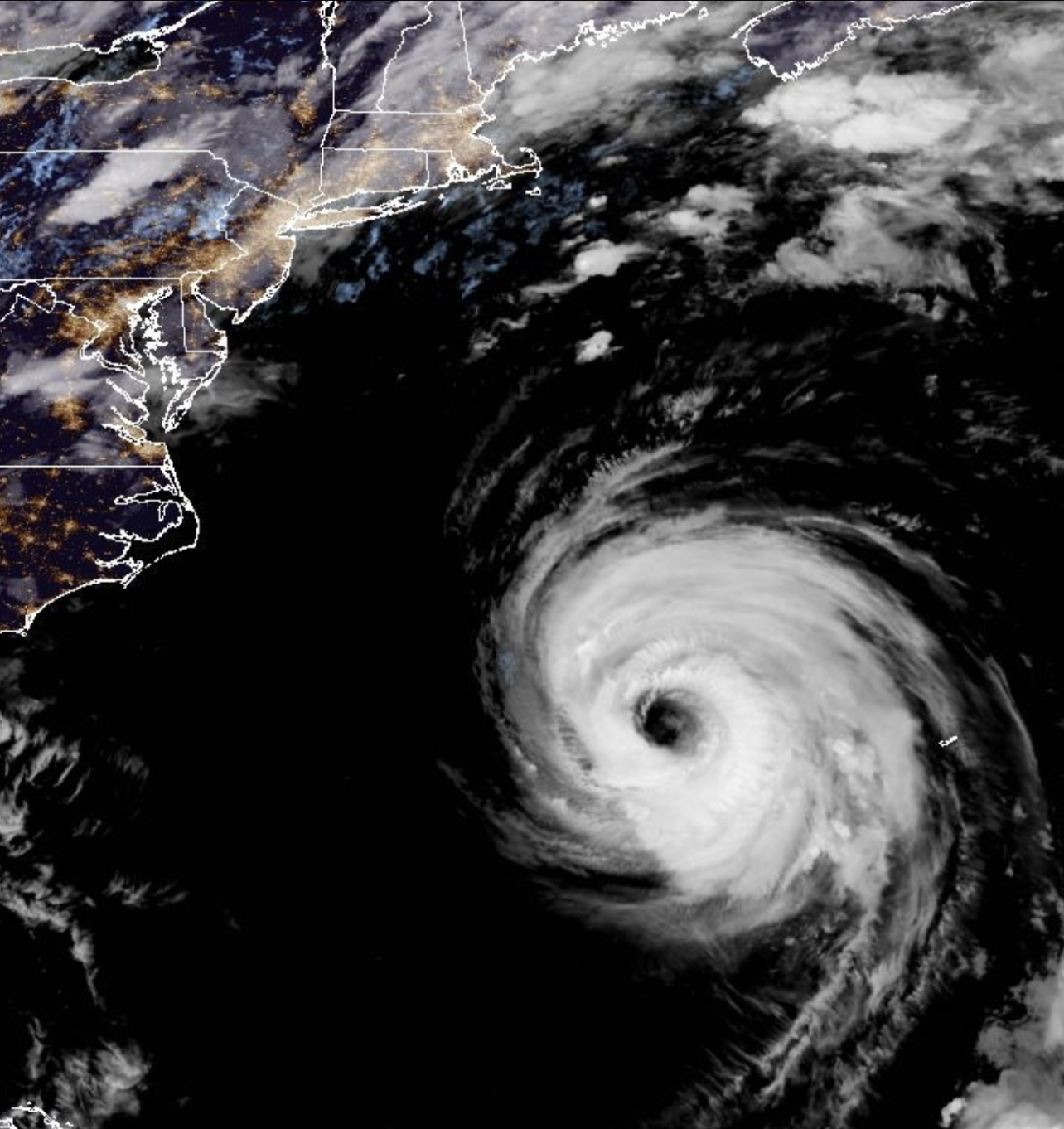
Hurricane Sandy is done as a tropical cyclone, but it will be a storm long remembered by many, especially in the Mid-Atlantic States of Maryland, Delaware, New Jersey, New York, and even Pennsylvania.  Of all the storms that I have lived through including Irene last year, this was the worst.  Not just the worst tropical storm or hurricane, but the worst storm period.  The legacy of Sandy here in New Jersey, New York, and Long Island will be the wind and surge.

This large and powerful storm produced tremendous winds by Jersey standards with winds whipping frantically for several hours on Monday night.  The winds had been picking up during the afternoon, but then around the 5:00 PM hour, they appeared to abate in Atlantic City and New York City.  About a hour later though they dramatically picked up again, and increased to as high as 100 miles per hour.  Here at the hotel that I am staying at, the winds have been relentless, and it felt like they were going to bust through the window in my room.

By the way, the winds aren’t going to slacken for a while either.  The slow moving storm will cause the high winds to linger for at least another 24 hours.  Along the coast, there was the surge.  A record surge was set in New York Harbor at King’s Point (13.3 feet) and Battery Park (13.7 feet).  Sandy Hook also was hit with a record surge of 13.3 feet.   The previous record for surge in New York Harbor was from the 1821 hurricane. The barometric pressure fell to 940 millibars, or 27.76 inches of Hg before the storm turned post-tropical and came ashore.  At GWC, the barometric pressure fell to 28.42 inches of Hg (Mercury) or 962 millibars, which shattered the record of 970 millibars set in Hurricane Irene last year.

The storm has left New York City as well as many locales around New Jersey reeling.  Flooding has occurred in many parts of the area, especially near the coast.  Trees have fallen on people.  A crane has partially collapsed in Midtown Manhattan.  Water poured into the PATH station in Hoboken.  Fires have broken out.  Transformers have blown all across the region.  Almost 5 million people have been left without power around the region.   Trees were down across Route 18 near Sayreville.  Power was out throughout much of Sayreville, Old Bridge, South Amboy, and Colts Neck.  This storm could end up making Hurricane Katrina look like a walk in a park.

It was a very well predicted storm.  Much like Superstorm ‘93 was almost 20 years ago, Sandy was picked up quite well in the models, and even in terms of its intensity and conversion from a tropical to post-tropical system.  The storm lived up to the hype and was well behaved from a forecast standpoint.  The similarities between Sandy and Superstorm ‘93 didn’t stop there.  Sandy was a storm that had winds stretch across some 1,000 plus miles at peak size.  It covered not only the Mid-Atlantic, but also New England, and the Great Lakes States. Approximately 60 million people were affected. Similarly, Superstorm ‘93 affected some 26 states when it was all said and done.  Like Superstorm ‘93, Sandy brought a variety of weather including a record storm surge, tornadoes, and blizzard conditions to some of the affected areas.

Keep in mind that we are still scratching the surface of this weather event.   The true scope of the devastation from this storm will begin to be revealed with daylight on Wednesday.  Many things will not sort themselves out until later in the week.  Nevertheless, if we are just talking the shear meteorological numbers, Hurricane Sandy, or Superstorm Sandy has truly been a historic storm.  Something I as well as all of you will long remember.

08.29.12

Could Isaac Be Worse Than Katrina For Parts Of Northern Gulf?

Posted in Commentary, Storm History, Storm Facts, Hurricane Intensity, Tracking the Tropics at 11:06 pm by gmachos

Storm Shows That It’s Not Your Typical Category One Hurricane

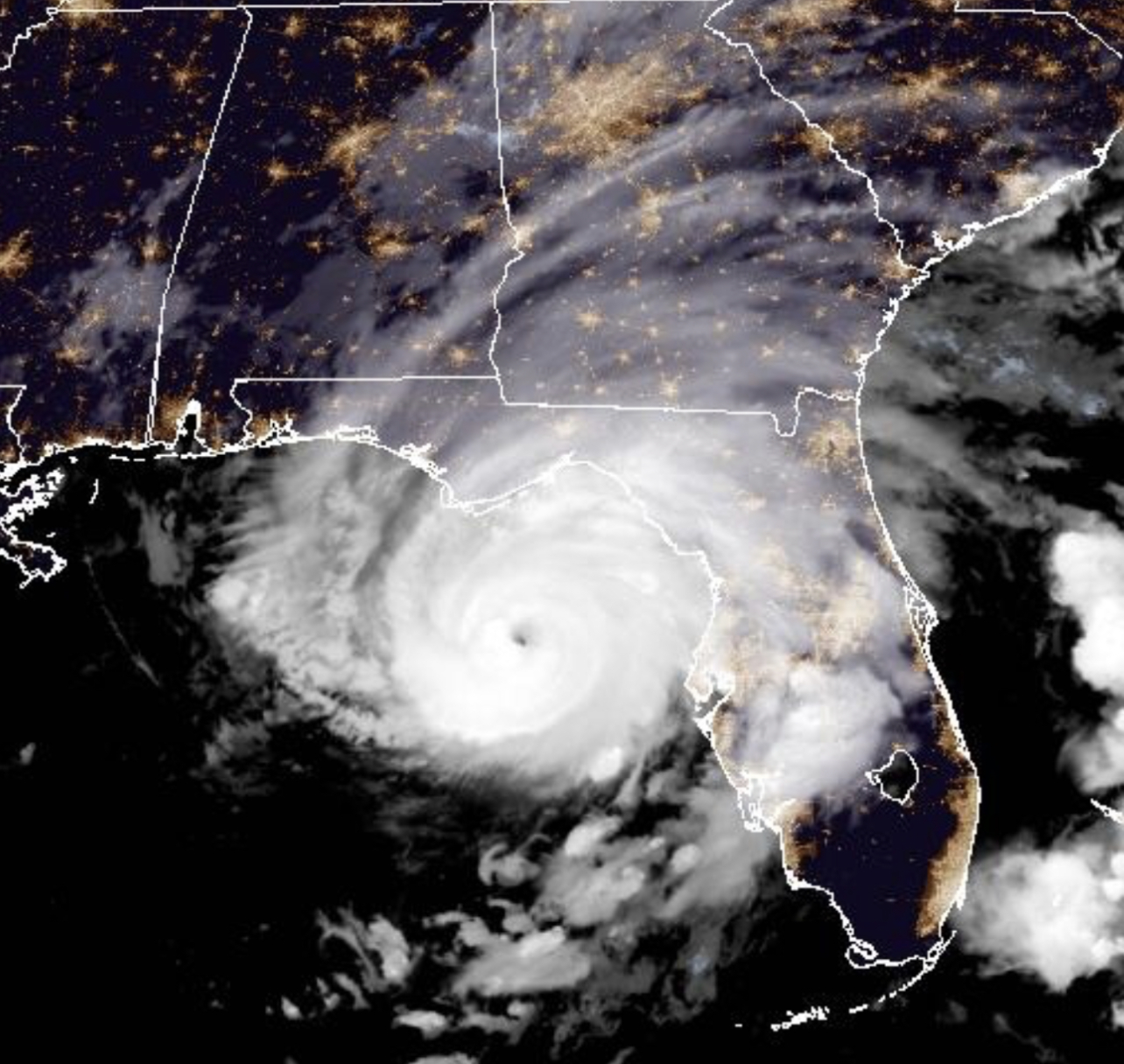
At first glance one wouldn’t think that Isaac is worth comparing to Hurricane Katrina. With its tremendous size, significantly lower pressure, and higher wind speeds and seas, Katrina was able to devastate the Northern Gulf coast like no other storm to a region of the United States. It was the deadliest U.S. hurricane since 1928, and the costliest natural disaster in the country’s history. The storm is among the top six strongest on record in terms of pressure.

Then, there is the images from the suffering in New Orleans following the storm. People standing on roof tops, pleading for help in front of the Convention Center, the state of anarchy that existed throughout the Big Easy, and the mass exodus from the city in the days and weeks after the storm. With all of this to consider when comparing Katrina to Hurricane Isaac, one would think that it would be a no brainer. However, with some thought and closer inspection, people may have a different idea. There are several things to keep in mind when looking back on Katrina. The path of the storm, decrease in intensity just prior to landfall, and short duration prevented this historic storm from being even worse.

Exactly several years ago to the day (Imagine the irony of that!), Hurricane Katrina took a path that put it to the east of New Orleans, which put the Crescent City on the weaker western side of the storm. Some people forget that it was the Mississippi Gulf Coast that bore the brunt of Katrina’s vicious right front quadrant. New Orleans only had winds of 90 miles per hour, and there were initial thoughts that the Big Easy had withstood the blow from the storm. It was only after the levee system had failed and the flooding began in the Lower Ninth Ward that a catastrophe was unleashed. This time around, Isaac traveled along a path that took it to the west of New Orleans and much of Southeastern Louisiana took the brunt of the right front quadrant.

Consequently, there was more of a storm surge factor for places such as Plaquemines Parish, which may have suffered worse flooding from Isaac than Katrina. Levees were breeched in a couple locations, and residents that stayed behind were caught by surprise after thinking the storm wasn’t going to be as bad. Another factor that may make Isaac worse than Katrina in some respects is its duration. Due to its very slow forward motion, Isaac is doing two things: 1.) Dumping tremendous amounts of rain over a long period of time, and 2.) Bringing in more and more surge and that is putting pressure on the levee system, especially in Plaquemines and St. Bernard’s Parishes. Many of these levees stand outside the area fortified by the Army Corps of Engineers in the wake of Katrina.

Issac is also not your typical Category One storm. The hurricane only had winds of minimal hurricane force at 80 miles per hour. However, around the times of its two landfalls, Isaac had a minimum central pressure that dropped to 968 millibars, or 28.58 inches of Hg, which was a pressure more typical of a solid Category Two Hurricane on the Saffir-Simpson Scale. Combined with the large size of the storm, the pressure gave the storm energy that took a long time to wind down because of the vast expanse of it. Throw in the slow forward speed, and you had a relentless storm that pounded the coastline of the Northern Gulf. Over 24 hours after landfall, Isaac was still generating storm surge of 6 to 7 feet in some places.

The slow motion of Isaac is also helping to bring tremendous amounts of rain to Louisiana and Mississippi. Rainfall amounts are ready in the area of a foot or more in some places, and could end up between 20 and 30 inches. Meanwhile, Katrina was a relatively fast mover. The massive storm was out of the area within 24 hours. Isaac is expected to linger around Louisiana for another day after pounding it for about 30 hours now. One thing that could help prevent more substantial flooding from Isaac is the fact that the Mississippi is at very low levels due to the drought throughout much of the Midwestern portion of the country. The Mighty Mississippi was at more normal levels at the time of Katrina.

Hurricane Katrina will forever be embedded in our minds thanks to the power and fury its winds and surge possess as well as the heartbreaking images from its aftermath. However, for some along the Northern Gulf coast such as Plaquemines Parish in Louisiana, Hurricane Isaac will be remembered as the little train that could, and was more devastating.

04.21.12

Saffir-Simpson Scale Gets Tweaked

Posted in Storm Facts, Hurricane Intensity at 5:00 pm by gmachos

Scale That Measures Hurricane Intensity Gets Minor Change For Category 4 Storms

Another loose end that was cleared up going into the 2012 Atlantic Hurricane Season was a minor adjustment done to the Saffir-Simpson Scale.  To clear up an issue with wind speeds for Category Four Hurricanes, the National Hurricane Center made an adjustment to the scale that measures hurricane intensity.  Now, Category Three Hurricanes will have winds from 111 to 129 miles per hour, Category Four storms will have winds from 130 to 156 miles per hour, and Category Five systems will have winds greater than 157 miles per hour.

The reason why this is occurring is because of a conversion issue with the wind speeds.  Maximum sustained winds measured in tropical storms and hurricanes are measured in knots, which are converted to miles per hour.  Currently, 115 knots is equivalent to 132.3 miles per hour.  When the wind speeds are converted from knots to miles per hour, they are rounded off usually.  In this case, 115 knots would be equivalent 130 miles per hour.  However, 115 knots, which has been within the current threshold for Category Four storms, usually is rounded up to 135 miles per hour. 

The same problem occurs with Category Four to Category Five hurricanes.  As a result, the scale has been tweaked to reflect the reduction of the wind speed interval in Category Three from 111 to 129 miles per hour, and Category Five now being set to 157 miles per hour or greater.  Now, the scale accurately reflects the wind speeds for Category Four systems.  The changes will become effective at the start of the 2012 Eastern Pacific Hurricane Season, which begins on May 15, and will also go into effect for the upcoming Atlantic season.

09.30.11

Ophelia Rebounds In Western Atlantic

Posted in Storm Track, Storm Warning, Hurricane Intensity at 3:26 pm by gmachos

Tenacious Storm Battles Back From Open Wave To Major Hurricane

A week ago, it seemed like the elements had gotten the best of Tropical Storm Ophelia.  Upper level wind shear and dry air appeared to have the fledgling storm on the ropes.  By Sunday afternoon, Ophelia had dissipated to an open wave.  Her demise was premature though.  Within 48 hours, the storm was back as a depression, and has flourished since.

On Friday morning, Ophelia energized into the third major hurricane of the 2011 Atlantic Hurricane Season.  It is the fourth hurricane overall so far this season.  There have been 17 depressions and 16 named storms.  All the hurricanes this year have occurred within the last five weeks.  The most devastating storm has been Hurricane Irene while the most powerful has been Hurricane Katia.

Ophelia could get as strong as Irene was at her peak, but it may be a tall order for the system to pass Katia as the season’s strongest storm.  Located about 580 miles South of Bermuda, Hurricane Ophelia now has maximum sustained winds of 115 miles per hour with gusts of 140 miles per hour.  Minimum central pressure is down to 960 millibars, or 28.35 inches of Hg.  The eye is well defined while hurricane force winds reach out some 30 miles while tropical storm force winds reach out about 175 miles.

A Tropical Storm Watch is in effect for Bermuda.  The five day forecast track has Ophelia moving to the east of Bermuda as a hurricane on Sunday morning.  The storm is expected to continue to push northward and possibly affect the extreme Southeastern coast of Newfoundland in the Canadian Maritimes.  With its latest strengthening, Ophelia is expected to still be a tropical storm as it moves towards the maritimes.

The latest forecast discussion indicates that Ophelia should be peaking in its intensity.  However, this storm is tenacious, and has outperformed all the intensity forecasts to this point.  In addition, Ophelia is still to the south of Bermuda, which means that there should be plenty of warm water.  There is still the threat of shear and dry air to hamper it, but the storm has strengthened to the point where it has an environment of its own, which will be harder to overcome.  The storm could strengthen a bit further.

09.05.11

Katia Strengthens Further In West Atlantic

Posted in General, Storm Track, Storm Preparation, GWC News, Hurricane Intensity at 11:24 pm by gmachos

Becomes First Category Four Hurricane Of 2011 Season

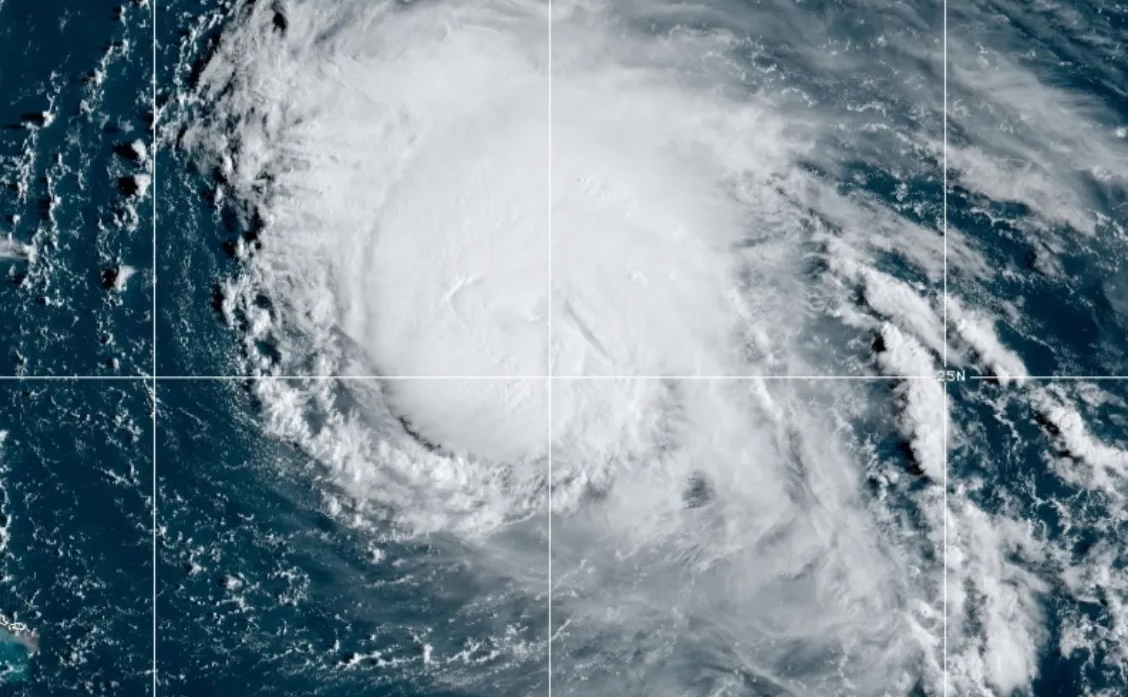
Earlier tonight, Hurricaneville had posted an article in the blog on Hurricane Katia strengthening to become the season’s second major hurricane in the Atlantic. Since that time, it has intensified further. The storm is now the first Category Four system of the 2011 Atlantic Hurricane Season.

Still out over the open waters of the Western Atlantic, Katia continued to deepen during the evening hours. Now located some 450 miles to the South of Bermuda, and moving to the Northwest at 10 miles per hour, Katia now has maximum sustained winds of 135 miles per hour, and gusts in excess of 160 miles per hour. Minimum central pressure has dipped to 946 millibars or 27.94 inches of Hg. The eye of the storm is still well defined at 25 miles in diameter. Hurricane force winds still extend some 60 miles from the eye while tropical storm force winds reach out some 205 miles.

The storm has a solid core, and good outflow although it still appears ragged on the northern and western side. Since Saturday night, when it weakened to a tropical storm with 70 mile per hour winds and a minimum central pressure of 992 millibars, or 29.29 inches of Hg, the storm has rapidly intensified with a 46 mb drop in 48 hours. One thing to keep in mind, all of the latest data on the storm is based upon interpretation of satellite imagery. No reconnaissance aircraft has been able to fly into the storm. No further strengthening is expected with the storm according to the latest forecast discussion.

However, Katia continues to be in a very favorable environment for further development. So until it reaches cooler waters and encounters more hostile upper level conditions, it is possible that the storm could strengthen further. The forecast track is becoming more and more certain. The models are coming together and becoming more confident on a track between Bermuda and the East Coast of the United States by later in the week. Nevertheless, the storm is still going to create large swells, dangerous surf, and rip currents along much of the East Coast of the United States.

09.01.09

Hurricane Jimena Near Category Five Strength

Posted in Storm Track, Eastern Pacific, Storm Warning, Hurricane Intensity at 1:43 am by gmachos

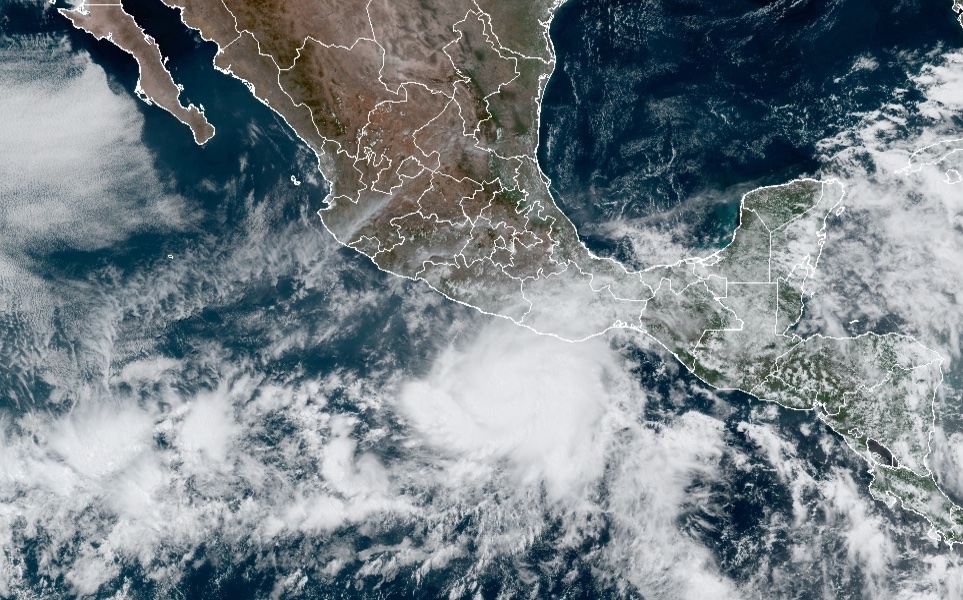
Throughout the day, Hurricaneville has been keeping tabs on what has been happening in the Eastern Pacific. Earlier this morning, the site posted on article in the blog on Hurricane Jimena, which rapidly deepened into a major hurricane over the weekend just miles off the West Mexican Coastline.

During the day on Monday though, Hurricane Hunter aircraft flew into the system, and found it was even stronger. Late Monday morning (Pacific Daylight Time), reconnaissance had discovered that the hurricane now had winds of 150 miles per hour, and a minimum central pressure of only 936 millibars, or 27.63 inches of Hg. Three hours later, the storm continued to intensify as it was now on the cusp of being a Category Five Hurricane on the Saffir-Simpson Scale with sustained winds reaching 155 miles per hour while minimum central pressure dipped some more to 931 millibars, or 27.49 inches of Hg.

The latest advisory (5 PM PDT) has Jimena staying status quo strengthwise. However, the storm is getting closer to the Southern tip of Baja California. In addition, the system has grown in size with hurricane force winds extending some 45 miles from the center of circulation while tropical storm force winds reach some 140 miles from the eye. Right now, a Hurricane Warning is in effect for the coast of Baja California from Bahia Magdalena in the West around Cabo San Lucas in the South to San Evaristo in the East. A Hurricane Watch is in effect from north of Bahia Magdalena to Punta Abreojos on the West Coast of Baja California, and north of San Evaristo to Mulege.

Looking at the latest satellite imagery out of Mexico, you can see a well defined eye with Jimena as well as a strong solid core. There is also good outflow, and very deep convection, particularly near the center. The last NHC discussion from this afternoon indicated that there was a 149 knot wind at 700 millibar/flight level. In addition, there was a 132 knot wind at the surface in the Northeast Quadrant, 128 knot wind in the Northwest Quadrant, and a 125 knot wind in the Southwest Quadrant. So, there is pretty good symmetry with this system, especially at the core. Expect fluctuations in intensity as now the system will probably go through some eyewall replacement cycles. After that, the SHIPS intensity model indicates cooler water and an increase in southwesterly shear over the next 36 hours. However, the forecast still calls for Jimena to be a major hurricane at landfall.

Over the past few hours, Jimena has wobbled a bit to the right, but that is not uncommon for storms of this strength to do as long as it does not stay a trend. We will have to continue keeping an eye on that. Right now, the official track by the NHC has the storm heading in a North-Northwest to North direction that would take it over the western coast of Baja California between Bahia Magdalena and Punta Abreojos by mid to late morning on Wednesday. However, that means that the stronger Northeastern Quadrant will be affecting Cabo San Lucas northward to Mulege. Another fear with this system is that it is going to slow down, and produce torrential rains over inland portions of Western Mexico.

All interests in Western Mexico and Baja California should closely monitor the progress of this storm, and those in the watch and warning areas should be taking the necessary precautions and preparations for this dangerous storm. Hurricaneville will continue to track the storm, and post updates as they warrant.

08.30.08

Gustav Undergoing Rapid Intensification?

Posted in Storm Track, Commentary, Storm Facts, Hurricane Intensity at 12:57 am by gmachos

Good evening everyone. As you can see from what I’ve done on the site today, I’ve been trying to get myself into tropical storm and hurricane mode finally over spending much of the summer focused on basketball. I caught myself a break over the past two or three days when Gustav struggled to keep itself together after coming ashore over Southwestern Haiti, and weakening to a tropical storm with 45 mile per hour winds.

Speaking of Gustav, have you been watching the central barometric pressure readings over the past 18 hours? While Gustav moved through the island of Jamaica during the overnight on Thursday and Friday, the pressure had risen to 993 millibars, or 29.32 inches of Hg (Mercury) at 2:00 AM EDT on Friday morning according to that particular advisory from the National Hurricane Center. Since that time, the pressure has dropped an average of a millibar per hour to 975 millibars, or 28.79 inches of Hg as of the latest (8:00 PM EDT) advisory from the NHC. The storm, which was reclassified to a minimal Category One Hurricane with 80 mile per hour winds. Could this pressure drop be an early indication of a rapid intensification phase?

Looking at the latest discussion from the NHC, there is an indication that a rapid intensification with Gustav could occur. The SHIPS model indicates that there is a 35 percent chance that Gustav will undergo a 30 knot, or a 35 mile per hour increase in its sustained winds over the next 24 hours. The conditions are there for rapid development. The sea surface temperatures in the Western Caribbean are close to, if not optimal. SSTs in this region are probably the warmest throughout the entire hurricane season. Upper level dynamics are also supportive to strengthening. Bottom line is that the situation is just right for Gustav to make that jump from a fledgling hurricane to a major hurricane. Many storms that go through rapid intensification start off as a tropical storm or minimal hurricane, and then rapidly intensify to a powerful hurricane of Category Four or Five strength.

Classic examples of this rapid intensification were: Hurricane Katrina, Rita, Wilma, Andrew, and Ivan. All five of these storms ended up as Category Five Hurricanes at one point in their lifetime, and after a rapid intensification phase. Going back to the latest discussion from the NHC, the forecast calls for Gustav to peak as a strong Category Three Hurricane with winds of 110 knots, or 125 miles per hour. Even at 72 hours, winds will still be at 120 miles per hour, which will still be nothing to sneeze at as it closes in on some point along the Gulf Coast of the United States.

04.12.08

Using Sound To Measure Hurricane Intensity

Posted in General, GWC News, Hurricane Intensity at 1:58 am by gmachos

I’ve been continuing to read articles off the Internet with regard to hurricanes and tropical storms. I’ve reviewed links to articles dating back to November, and the end of the 2007 Atlantic Hurricane Season, and I’ve found quite a bit of interesting information. The latest little jewel that I found, and promptly shared with those on the Hurricaneville Mailing List was this article that appeared this week in Science Daily about how researchers are trying to use sound as a way to measure a hurricane’s intensity. For those of you, who may have not been aware, the Long Island Express Hurricane of 1938 was so powerful, and moved so rapidly up the East Coast that it actually registered on the Richter Scale as far away as Alaska when it roared ashore over Long Island on September 21st of that year.

One of the big problems with hurricanes is being able to record the exact intensity of these powerful storms, especially when they are far out at sea over the tropical waters of the Eastern Atlantic, or far out in the shipping lanes of the North Atlantic. However, with a new tool that is being developed by a group of researchers at MIT, there may be finally a way to record a hurricane’s intensity far out at sea by using sound. According to the article, which was posted on Thursday, April 10th, researchers have come up with the idea of placing underwater microphones far below the surface in the path of a hurricane to measure the storm’s wind power as a function of the sound it produces. The combination of the winds, wind driven waves, and the foam and spray produced by a hurricane can create a rushing sound that can determine the power of such a storm.

Up and until now, the National Hurricane Center has only been able to fly Hurricane Hunter and Air Force Reconnaissance aircraft into these storm systems to record all the up to date information. However, this can prove dangerous, and although there haven’t been any storm related plane crashes in recent years, the act of flying into such storms has proven deadly in the past. There has been news stories in recent years that have indicated the NHC is moving toward having unmanned aircraft such as Predator Drones that are used by the military in places such as Afghanistan and Iraq to be able to record data from these storms, but this can be a promising tool especially in very hard to reach places such as the middle of the Pacific Ocean, or the Far Eastern Atlantic between the Cape Verde Islands and the Lesser Antilles, where aircraft do not have enough fuel to fly out to meet developing storms.

This could also be very helpful to those in the shipping lanes of the North Atlantic where there is a vast expanse of land between the East Coast of the United States, Greenland, Bermuda, and the Azores. More importantly, it could prove more cost effective than drone aircraft while still providing the remote sensing information that will reduce the need for manned flights.