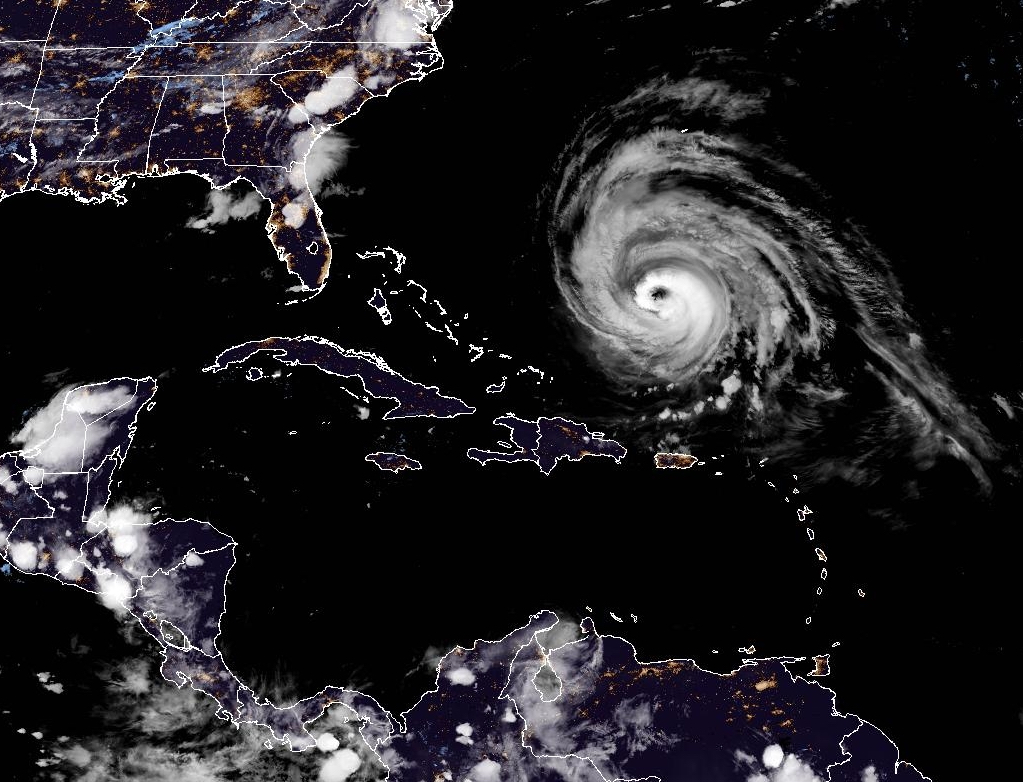
11.01.12

Cost From Superstorm Sandy Will Surpass Katrina

Posted in Commentary, Storm Facts, Storm Aftermath, Hurricane Records, Tracking the Tropics at 5:36 am by gmachos

Price Tag For Damage From Sandy Will Be Even More Staggering

In 2005, Hurricane Katrina struck the Northern Gulf coast with a ferocity that devastated New Orleans and the Mississippi Gulf Coast, and the price tag of that storm was $108 billion dollars. It stands as the costliest natural disaster in United States History surpassing that of Hurricane Andrew, which cost South Florida some $27 billion dollars in damage. Hurricane Ike became the second costliest storm on record with $29.5 billion dollars in damage to the Houston and Galveston area of Texas in 2008. However, the damage produced Superstorm Sandy will generate a price tag that will dwarf them all. For those, who don’t think that the cost of this storm will surpass Katrina, think again.

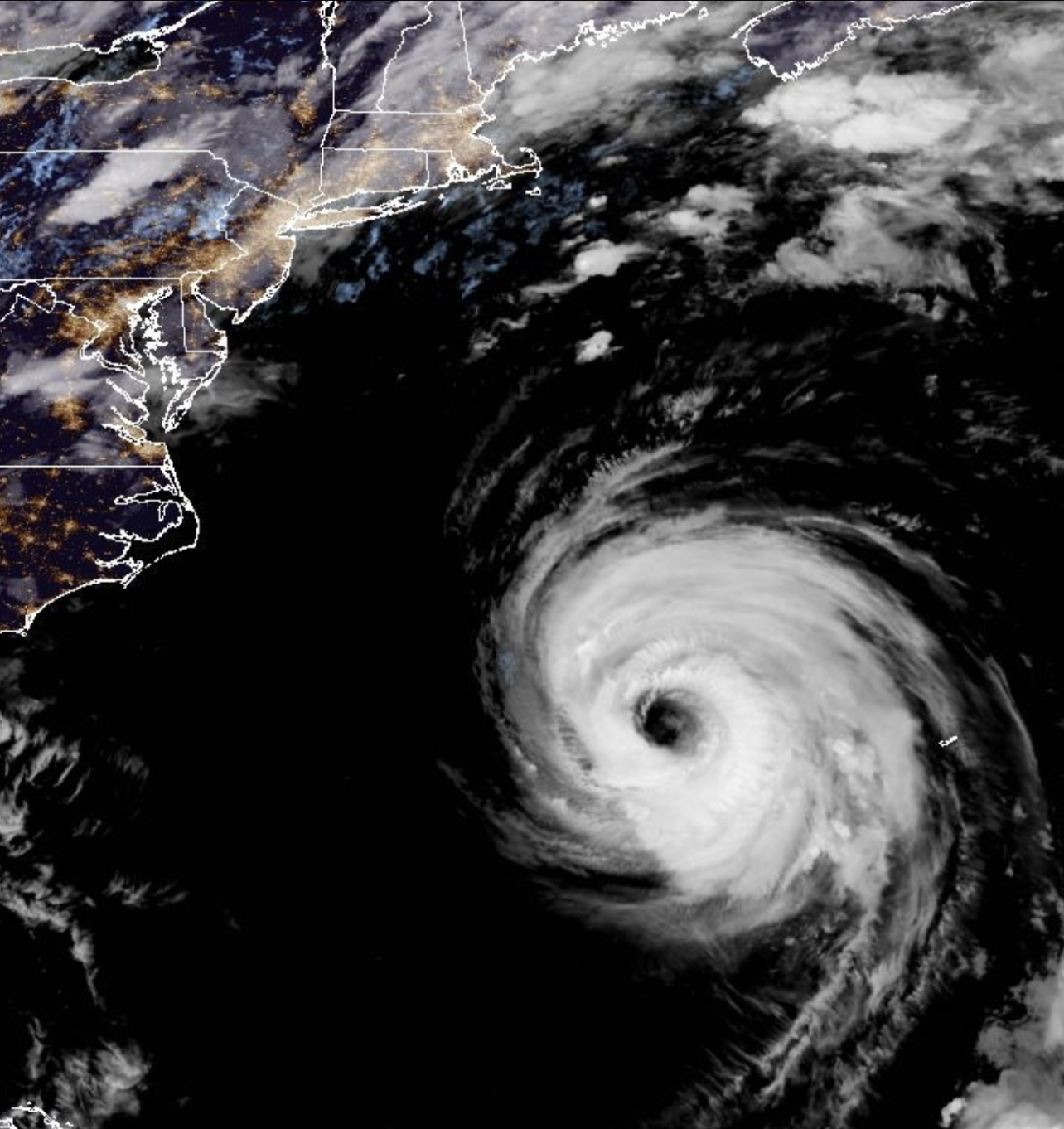
It’s very early in the game. The aftermath of Sandy is just two days old, and the recovery process is in its infancy, but the scenes of damage along the Jersey Shore, New York City, Long Island, and Coastal Connecticut alone has been overwhelming. The storm produced record storm surges at Battery Park in New York City (13.88 feet) and Sandy Hook (13.3 feet). Here in South Plainfield, New Jersey which is far inland in the Northwestern corner of Middlesex County, there is significant wind damage. The scope of Superstorm Sandy’s impacts are so vast with blizzard conditions in West Virginia, and as far south as the mountains of Eastern Tennessee (Mount Leconte had 34 inches at last count), waves of 20.3 feet on the south shores of Lake Michigan near Chicago, and severe thunderstorms in Massachusetts and New Hampshire.

Earlier this year, Hurricane Irene was ranked as the seventh costliest storm ever after the devastation it produced across the Northeast in late August of 2011. The price tag for that storm was $10 billion, and the storm only produced a storm surge of 4 to 5 feet in New York City, and along the Jersey Shore. Irene was no Sandy either. While Irene was a storm that was fading as it came through New Jersey and New York last year, Sandy was a much more energized storm. I was in South Amboy’s Waterfront Park for both storms, and Sandy’s surge was already at the same level that Irene was when it was coming up the Jersey coast last year, and Sandy was still a number of hours from landfall. Furthermore, Sandy was a much stronger and larger storm with size that was almost twice that as Irene, and a barometric pressure that was 946 millibars at landfall, a good 14 millibars lower than Irene was when it came up through Jersey. Sandy’s path also resulted in a more direct impact to the Jersey Shore and New York City.

By making its landfall in South Jersey, Sandy was able to deliver the brunt of its power to the very expensive properties that lie along the Jersey Shore in places such as Long Beach Island, Spring Lake, Sea Girt, Sea Bright, and Rumson as well as the financial capital of the world in New York City, and the casinos and entertainment hot bed of Atlantic City. Very expensive homes also lie along the coast in both Long Island and Coastal Connecticut, which were hit hard by the surge coming in from the Atlantic and Long Island Sound. These places were also hit in the post-Katrina era where insurance premiums have skyrocketed in the wake of that monumental storm. In 2001, the site also discussed the studies by insurance companies that indicated that a major hurricane hitting the Jersey Shore would cause some $50 billion dollars in damage, and this was almost five years before Katrina. Back in 2006, Hurricaneville had written an article that discussed another article by the Newark Star-Ledger that pointed out the building of multi-million dollar homes along the Jersey Shore in spite of the changing weather patterns and insurance climate.

This storm’s effects were also felt well inland. Entering the third day of the aftermath of this storm, and there were still numerous traffic lights down around South Plainfield, and many adjacent municipalities in Middlesex County. Many secondary and tertiary roads in New Jersey are still closed, especially in Middlesex County, Monmouth County, and Ocean County. Many trees have been uprooted, telephone poles snapped, and cell phone towers have been damaged. Power is still out for many in the Garden State, and cell phone communication has been spotty at best. Add to all of this the other events that have occurred as a result of the storm such as the 130 homes that were destroyed by fire spread by the winds from Sandy in the coastal community of Breezy Point, New York, and you have a very staggering price to pay for this storm.

The devastation along the coast in New Jersey, New York, and Connecticut as well as significant damage to inland areas to those states and others from Hurricane/Superstorm Sandy will generate a price tag that will ultimately dwarf that of Hurricane Katrina when it hit the Northern Gulf Coast in 2005. In a climate where weather patterns have made places such as the New York City Metropolitan area, the Jersey Shore, Long Island, and Connecticut more vulnerable, and insurance premiums in these areas as well as New England have risen significantly in a post-Katrina world, the cost could easily be billions of dollars alone. Add to that the cost of damage further inland to communities far away from the coast and as far south and west as West Virginia, Illinois, and Tennessee, and we could have our first 100 billion dollar storm.

10.30.12

Facts From Superstorm Sandy

Posted in Storm History, Storm Facts, Hurricane Records, Tracking the Tropics at 10:34 pm by gmachos

Over the past week, Hurricane Sandy ravaged the Caribbean, and then took an unprecedented path of devastation through the Mid-Atlantic, Northeast, and Great Lakes before moving into Canada.  The storm was an historic storm that rivaled memorable storms such as The Perfect Storm, Superstorm ‘93, The Long Island Express of 1938, The Great Hurricane of 1821, and Hurricane Donna.  Below are some of the facts that I have collected on the storm.

Facts compiled from CNN, New York Times, USA Today, Huffington Post, WB11 (PIX11), WABC, WNBC, WCBS, and FOX5.

  • Storm made landfall near Atlantic City, New Jersey.
  • Minimum central pressure was 940 millibars, the lowest ever recorded north of Cape Hatteras, North Carolina.
  • The storm had tropical storm force winds over 1,000 miles wide.  The entire system encompassed 2,000 miles.
  • The storm combined with a cold front, blocking high pressure, and a strong dip in the jet stream to become a superstorm that brought all kinds of weather including high winds, rain, waves, storm surge, tornadoes, and even blizzards.
  • A record storm surge occurred in New York Harbor at 13.88 feet in Battery Park.  King’s Point had a surge of 13.3 feet.  Sandy Hook, New Jersey also reported a surge of 13.3 feet.
  • At least 33 people dead nationwide from the storm.  Add that to 69 deaths in the Caribbean for a death toll of 102.
  • 18 People Dead New York State including 10 in New York City.
  • Six People Dead In New Jersey.
  • Four Dead in Pennsylvania
  • Some 60 million people were affected by this storm, or about one in every six Americans.
  • Originally, some 8.2 million people without power.  Still about 5 million people remain without power.
  • Power failures in 17 states.
  • Waves rose to 20.3 feet in the southern part of Lake Michigan.
  • New York City’s mass transit system from the Subways, Buses, Metro North and Long Island Railroad trains were left out of service due to the storm.
  • Initial estimates of $5 to $10 billion in damage, and that is expected to be much higher.
  • Predicted losses of $20 billion in damage and another $10 to 30 billion in lost business from the storm by IHS Global Insight.
  • Wall Street closed for two days, which is the longest it has been closed besides the days after 9/11.  First time the NYSE has been closed for two straight days due to weather.
  • Schools will be closed throughout New York City for a third straight day.
  • Between 80 and 110 homes destroyed by fires fanned by the winds from Hurricane Sandy in Breezy Point.
  • Hackensack River in New Jersey went over its banks and flooded portions of Hackensack, South Hackensack, Little Ferry, and Moonachie.
  • Con Edison Substation on 14th street suffered An Explosion knocking out power to some 250,000 NYC residents.
  • Critically ill patients had to be evacuated from NYU’s Langone Medical Center in NYC.
  • About 50 percent of Hoboken, New Jersey remains under water.
  • Trees down throughout much of New Jersey.
  • New Jersey secondary roads such as Routes 34, 35, 36, and 37 remain closed in Middlesex, Monmouth, and Ocean counties.  Portions of Route 22 closed in Hunterdon County.
  • Jersey Shore coastal communities such as Belmar, Bradley Beach, Avon By The Sea, Asbury Park, Spring Lake, Sea Girt, Seaside Heights, Lavallette, Ortley Beach, and Ocean City were left devastated by the storm surge from Sandy.  Belmar’s famous boardwalk was destroyed as well as the one in Spring Lake.  Famous rides in Seaside Heights were wiped out.
  • Atlantic City’s boardwalk lost several blocks.

10.29.12

Sandy Will Be Worse Than Irene

Posted in Commentary, Storm History, Storm Facts, Storm Preparation, Storm Safety, Hurricane Anomalies, Tracking the Tropics at 1:17 am by gmachos

Storm’s Track And Strength Much Different Than Irene Was

Hours away from what could be an historic landfall along the Jersey Shore, Hurricane Sandy is expected to be a devastating storm.  However, there are those around the Garden State and neighboring states that think it would be as bad.  They will ride it out just like they did with Irene.  There is just one problem with that, and that is Sandy is a much different animal than Irene was.

The storm’s track, size, momentum, and intensity is expected to be much different than Hurricane Irene was when it came up the coast.  Differences between the two storms range from minimum central pressure, storm surge levels, and maximum sustained winds.  Here is a breakdown of how Sandy is a much different threat than Irene.

Storm Track

Sandy’s projected track is going to be much different than Irene’s was.  Normally, tropical storms and hurricanes run along the East Coast of the United States, and don’t directly impact New Jersey.  Irene was a rare exception last year with two landfalls near Cape May and Little Egg Harbor.  However, the bulk of the Garden State remained on the western side of the storm, which is traditionally not as strong due to the counterclockwise flow around the low.  

Unfortunately, Sandy’s track will be much different and unprecedented, which could cause a lot of trouble.   Right now, Sandy is moving to the Northeast,  parallel to the Mid-Atlantic coast.  However, there is a blocking pattern in place with an area of high pressure to the northeast of Sandy, which will prevent it from escaping into the Atlantic.  On top of that, there is a cold front moving in from the west that will also pull the storm in.  In response, Sandy will make a left turn into the Jersey Shore anywhere from Toms River south to Atlantic City.

What this projected landfall along the Jersey Shore means is that a lot of the  Garden State including my hometown of South Plainfield in Middlesex County will face the storm’s notorious right front, or northeast quadrant.  This is the part of the storm that has the strongest winds and roughest weather.  

Storm Strength And Momentum

The strength of both Sandy and Irene are pretty much the same if you are looking at just the maximum sustained winds.  Irene ended up being a tropical storm upon landfall with 70 mile per hour winds.  Sandy currently has winds of 75 miles per hour, and could further strengthen to 80 mile per hour winds by landfall.  However, Sandy is a much deeper storm in the sense that its pressure is very low than a typical Category One Hurricane.  

Similar to Hurricane Isaac, which affected Louisiana back in August, Sandy is not your typical minimal hurricane with a minimum central pressure currently at 950 millibars, or 28.05 inches of Hg.   This is crucial because remember there is a high pressure system to the north, and that is creating a very strong pressure gradient with the hurricane.  A pressure gradient is a difference in pressure over a particular distance.  The pressure gradient will also add to the wind while the low pressure  itself will also help stir up the tide levels slightly.

Another difference between Sandy and Irene is the momentum each had prior to landfall.  If you recall, Irene limped her way to the finish line last August thanks to the entrainment of dry air into the system.  Irene was a ragged storm just hanging on to hurricane strength by the time it made land in Jersey. On the other hand, Sandy has been not only  able to maintain its strength, it has also been able to deepen with a drop of 10 millibars in pressure alone on Sunday.  It should be further energized when it moves across the Gulf Stream, and morphs into a hybrid storm as forecast.

Storm Size

Irene was a very large storm in its own right with tropical storm force winds stretching another 300 plus miles beyond the hurricane force winds.  Compared to Sandy though, it is much smaller storm.  As of the most recent advisory on Sunday night, Hurricane Sandy had hurricane force winds extending some 175 miles while tropical storm force winds extend some 520 miles.  

What that means is that Sandy is about 1,000 miles wide.  The storm is the second largest tropical cyclone in the Atlantic since 1988.  Hurricane Igor, which occurred during the 2010 Atlantic Hurricane Season,  is the largest in the last 25 years.  Hurricane Gilbert was the vast Atlantic storm in 1988 when it was as big as the state of Texas after making landfall in the Yucatan and coming ashore again near Matamoros, Mexico.

The size is important because that will play a role in determining the duration of the rough weather conditions.  It will also cover a broader area.  The entire state will feel winds of 60 to 80 miles per hour at the height of the storm.  Conditions will be felt as far west as Ohio and Indiana.  

One Final Note

Besides the heavy rain, wind, waves, and storm surge being stirred up in the Mid-Atlantic from the Delmarva to New England, this system will also be unique in the sense that it will help produce heavy snowfall in Southwestern Virginia, West Virginia, Eastern Tennesse, and Western North Carolina along the Appalachian Mountains.  In terms of its size, scope, power, and variety of weather, Sandy could equal and even surpass Superstorm ‘93.

09.10.12

Michael Surprises To Become Season’s First Major Hurricane

Posted in Commentary, Storm Facts, Tracking the Tropics at 7:30 pm by gmachos

Unlikely Small Storm In Central Atlantic Rapidly Deepens To Category Three Strength Last Week

It has been somewhat of a strange season in the Atlantic.  The 2012 season has had its share of surprises.  Whether it has been exceeding pre-season expectations, or even going toe to toe with some of the most active years in terms of the number of named storms, this season, which wasn’t expected to be that active thanks to a forecasted El Nino, 2012 has opened some eyes.

Another surprise so far this season had been the lack of major hurricanes.  Up and until last week, no major hurricanes had developed in the Atlantic this season.  So, despite the record number of storms, none grew to become Category Three strength or better.  Hurricane Michael changed all of that.  A small tropical cyclone that first emerged in the Central Atlantic, Michael wasn’t expected to become much of a storm.  It was forecast to peak in four days with 45 mile per hour winds after first becoming a storm on the day after Labor Day.

However, the storm didn’t cooperate.  Instead, it went through a rapid deepening phase that saw its minimum central pressure drop 47 millibars within 60 hours.  By early Thursday morning, September 6th, the storm became the first major storm of 2012 in the Atlantic with 115 mile per hour sustained winds, gusts up to 120 knots, or 140 miles per hour, and a minimum central pressure of 965 millibars, or 28.50 inches of Hg.  Prior to that, the strongest storm to date this season had been Hurricane Gordon, another Central Atlantic storm that experienced a bit of a deepening phase as well.

Michael has been a very small storm throughout.  As of the latest advisory from the National Hurricane Center, the storm has hurricane force winds extending some 25 miles from the eye, and tropical storm force winds reaching out some 80 miles.  At peak intensity, the storm had hurricane force winds extending out only 15 miles and tropical storm force winds reaching out some 70 miles.  During its initial genesis, the storm only had tropical storm force winds reaching out some 35 miles.

This small size and rapid deepening with Michael was in sharp contrast to both recent hurricanes Isaac and Leslie, which were both very large storms with tropical storm force winds extending at least 200 miles from the center, but they struggled to intensify throughout their lifetimes.  With the development of Michael, there have been 13 depressions, 13 named storms, 7 hurricanes, and one major hurricane.

09.04.12

Atlantic Activity Surprising So Far In 2012

Posted in Commentary, Storm Facts, Tracking the Tropics at 5:03 pm by gmachos

Despite Early Forecasts For A More Average Season, Atlantic Storms Near Record Pace

So much for a less active than usual Atlantic this season. The statistical peak is less than a week away, but already there have been 13 named storms that have formed. The latest storm, Michael, emerged on Tuesday morning from a tropical depression that developed on Monday afternoon. Think about it for a minute. The tropics in the Atlantic have already produced an “M” named storm, and we’re just at the beginning of September.

A couple weeks ago, the 2012 season equaled marks for the fastest forming “J” storm of the season, and then almost equaled the 1995 season for the earliest forming “L” storm. With the formation of Michael, the 2012 Atlantic Season was only second to the historic 2005 season for the earliest forming “M” storm. In 2005, Hurricane Maria developed on September 2nd while Michael formed on September 4th. The “M” storm for 1995, Hurricane Marilyn, formed in the early evening of September 12th.

It is pretty amazing considering all of the talk about an El Nino developing, and the lower expectations given prior to the start of the season, and we’re now seeing a year that is rivaling the most active hurricane seasons in the past 20 years. To be just two days off the pace of the most active season on record is simply mind-boggling. In 2005, there were 28 named storms with 15 of those storms becoming hurricanes, and 7 becoming major hurricanes. Four of the major hurricanes were Category Five strength at one point. Meanwhile, 1995 was the year that kicked off this latest busy cycle, and the third most active season behind 1933 and 2005. In 1995, there were 21 depressions, 19 named storms, 11 hurricanes, and 5 major hurricanes.

So far this season, 2012 is looking more like 1995 did. Despite the record numbers of storms, there have only been five hurricanes, and we’re still waiting for our first major hurricane. There were a couple landfalling systems in the United States with Hurricane Isaac bringing the most damage. Some parts of Louisiana were hit harder by Isaac than they were by Hurricane Katrina back in 2005. However, despite rivaling the 2005 season’s record pace, this year is far from being as brutal a season as that one was.

Still it is quite amazing that despite the low expectations for this season in terms of overall activity, it has fared quite well.

08.29.12

Could Isaac Be Worse Than Katrina For Parts Of Northern Gulf?

Posted in Commentary, Storm History, Storm Facts, Hurricane Intensity, Tracking the Tropics at 11:06 pm by gmachos

Storm Shows That It’s Not Your Typical Category One Hurricane

At first glance one wouldn’t think that Isaac is worth comparing to Hurricane Katrina. With its tremendous size, significantly lower pressure, and higher wind speeds and seas, Katrina was able to devastate the Northern Gulf coast like no other storm to a region of the United States. It was the deadliest U.S. hurricane since 1928, and the costliest natural disaster in the country’s history. The storm is among the top six strongest on record in terms of pressure.

Then, there is the images from the suffering in New Orleans following the storm. People standing on roof tops, pleading for help in front of the Convention Center, the state of anarchy that existed throughout the Big Easy, and the mass exodus from the city in the days and weeks after the storm. With all of this to consider when comparing Katrina to Hurricane Isaac, one would think that it would be a no brainer. However, with some thought and closer inspection, people may have a different idea. There are several things to keep in mind when looking back on Katrina. The path of the storm, decrease in intensity just prior to landfall, and short duration prevented this historic storm from being even worse.

Exactly several years ago to the day (Imagine the irony of that!), Hurricane Katrina took a path that put it to the east of New Orleans, which put the Crescent City on the weaker western side of the storm. Some people forget that it was the Mississippi Gulf Coast that bore the brunt of Katrina’s vicious right front quadrant. New Orleans only had winds of 90 miles per hour, and there were initial thoughts that the Big Easy had withstood the blow from the storm. It was only after the levee system had failed and the flooding began in the Lower Ninth Ward that a catastrophe was unleashed. This time around, Isaac traveled along a path that took it to the west of New Orleans and much of Southeastern Louisiana took the brunt of the right front quadrant.

Consequently, there was more of a storm surge factor for places such as Plaquemines Parish, which may have suffered worse flooding from Isaac than Katrina. Levees were breeched in a couple locations, and residents that stayed behind were caught by surprise after thinking the storm wasn’t going to be as bad. Another factor that may make Isaac worse than Katrina in some respects is its duration. Due to its very slow forward motion, Isaac is doing two things: 1.) Dumping tremendous amounts of rain over a long period of time, and 2.) Bringing in more and more surge and that is putting pressure on the levee system, especially in Plaquemines and St. Bernard’s Parishes. Many of these levees stand outside the area fortified by the Army Corps of Engineers in the wake of Katrina.

Issac is also not your typical Category One storm. The hurricane only had winds of minimal hurricane force at 80 miles per hour. However, around the times of its two landfalls, Isaac had a minimum central pressure that dropped to 968 millibars, or 28.58 inches of Hg, which was a pressure more typical of a solid Category Two Hurricane on the Saffir-Simpson Scale. Combined with the large size of the storm, the pressure gave the storm energy that took a long time to wind down because of the vast expanse of it. Throw in the slow forward speed, and you had a relentless storm that pounded the coastline of the Northern Gulf. Over 24 hours after landfall, Isaac was still generating storm surge of 6 to 7 feet in some places.

The slow motion of Isaac is also helping to bring tremendous amounts of rain to Louisiana and Mississippi. Rainfall amounts are ready in the area of a foot or more in some places, and could end up between 20 and 30 inches. Meanwhile, Katrina was a relatively fast mover. The massive storm was out of the area within 24 hours. Isaac is expected to linger around Louisiana for another day after pounding it for about 30 hours now. One thing that could help prevent more substantial flooding from Isaac is the fact that the Mississippi is at very low levels due to the drought throughout much of the Midwestern portion of the country. The Mighty Mississippi was at more normal levels at the time of Katrina.

Hurricane Katrina will forever be embedded in our minds thanks to the power and fury its winds and surge possess as well as the heartbreaking images from its aftermath. However, for some along the Northern Gulf coast such as Plaquemines Parish in Louisiana, Hurricane Isaac will be remembered as the little train that could, and was more devastating.

Hurricane Isaac Brings Back More Memories Of Irene

Posted in Storm Track, Commentary, Storm History, Storm Facts, Tracking the Tropics at 9:37 pm by gmachos

Latest Gulf Storm Shares Similarities With Memorable Storm From 2011

During the course of the day on Wednesday, I listened to the Weather Channel, and heard a storm surge analyst from the National Hurricane Center say that no two storms are the same. However, two storms can have some parallels. Isaac has shown that it is not your typical Category One Hurricane on the Saffir-Simpson Scale. While it may only have had winds of minimal hurricane force, its pressure, size, and duration have made it a very memorable storm for those who are dealing with it in the Northern Gulf states. Moreover, this latest storm of 2012 shares some interesting commonalities with a memorable storm from 2011.

Isaac has brought back some recollections of Hurricane Irene, a vast storm that was the first storm to make landfall in New Jersey since 1903 a year ago this week. Both storms were very vast storms with large wind fields. Isaac grew to have hurricane force winds extend some 60 miles from the eye while tropical storm force winds reached out some 185 miles. Irene was actually larger with hurricane force winds extending 125 miles while tropical storm force winds stretched out some 240 miles.

These large circulations produced a good deal of surge and wave action. Isaac’s was much bigger because of the shallow coastline that exists in the Northern Gulf. Storm surge amounts with Isaac have been as high as 11 feet above normal in places just outside of New Orleans. The surge has been reported to be worse to the southeast in Plaquemines Parish, where parish President Billy Nungesser indicated that the flooding there was worse than during Hurricane Katrina.

Another similarity shared by these two storms is that they were both Category One storms with very low pressures at landfall. When Irene came through New Jersey last summer, its pressure was as low as 970 millibars or 28.63 inches of Hg. Prior to making landfall, Isaac bottomed out at 968 millibars, or 28.58 inches of Hg. These pressures were much lower than the usual threshold for a minimal Category One Hurricane. Usually pressures for minimal Cat One storms are about 985 to 988 millibars. The central pressures of Isaac and Irene were more characteristic of a Category Two storm.

The problem that these two storms had was the fact that they were so vast that they had a tough time trying to tighten up and get stronger. Isaac dealt with this problem throughout almost all of its storm life while Irene was plagued by it after it had gone through the Bahamas and trekked north toward the Carolinas and the rest of the Mid-Atlantic. A big difference between these two storms was that Isaac was like a marathon runner that sprinted his way to the finish line while Irene was one that limped her way to the finish. Another issue that both of these storms had to contend with was dry air entrainment.

Isaac battled dry air for just about its entire life while Irene began dealing with the dry air a little while after it moved through the Bahamas. Irene had indicated signs of strengthen after moving out of the Northern Bahamas, and emerging into the Gulf stream, but then the eye faded, and gradually, dry air began to take the life out of the storm, which was the saving grace for the East Coast. The Northern Gulf were also spared a worse fate from Isaac thanks to the dry air. Without ample water vapor in the atmosphere around it, Issac struggled to generate the thunderstorms needed for better organization and strengthening.

In addition to these similarities, and the obvious common trait they share as the I named storm for their respective years, they were both storms that made double landfalls in a state. Irene made two landfalls in New Jersey at Cape May and Little Egg Harbor while Isaac made two landfalls in Louisiana at Grand Isle and just west of Port Fourchon. There are differences though between these two storms. Irene was a major hurricane at one point in its lifetime having winds as high as 120 miles per hour while Isaac never got as strong as 80 miles per hour. Although both produced a lot of rain, Isaac generated much higher rainfall totals since its forward motion was much slower than Irene.

Isaac could end up putting down some 20 to 30 inches of rain in some parts of Louisiana and Mississippi. In terms of its size and duration, Isaac is quite similar to Hurricane Frances, which grinded its way through Florida back in 2004. Frances was a much bigger wind producer though.

07.04.12

Friday Derecho Leaves Many Reeling

Posted in Storm Track, Storm History, Storm Facts, GWC News at 5:10 pm by gmachos

A Million Still Without Power In Seven States

After midnight on Saturday morning, I was putting together an edition of the GWC Video Report, and had noticed on the regional radar that there was a powerful storm rolling through the Eastern United States. What happened was a Derecho emerged from a cluster of thunderstorms in Northeastern Iowa on Friday morning.

The derecho picked up momentum as it rolled through the Chicago Metro area, and pushed eastward into Indiana. The storm grew in size. Winds gusted to 91 miles per hour in places such as Fort Wayne while further east in Ohio, several places reported wind gusts of over 80 miles per hour. Traveling on the periphery of high pressure off the east coast of the United States that was responsible for a second heat wave of the young summer, the derecho barreled through West Virginia, and ultimately ended up bringing 71 mile per hour wind gusts to the nation’s capital of Washington, D.C.

In total about 5 million people were left without power originally from the derecho, which traveled over 650 miles and produced over 800 storm reports. Five days after the storm, approximately 20 percent of those affected still do not have power. Rural sections of West Virginia are not expected to have power restored until this weekend. This is forcing many to deal with the searing heat and humidity without air conditioning and water.

New Jersey wasn’t immune from the storm. Places in Atlantic County, on the northern end of what became a 350 mile wide storm, was placed under a State of Emergency. Trees and power lines were downed across the county. Nearby in Cumberland County, the city of Millville has already spent nearly $300,000 since Friday’s storm. There are still 17 streets in the city with hanging power lines. Eleven roads still remain closed throughout Cumberland County. Over 200,000 people were left without power.

Nationwide, there have been 20 deaths from the combination of the relentless heat and humidity, and this tremendous storm. Two of those deaths occurred in Pittsgrove down in Salem County, New Jersey when a tree fell on a camp site killing two children. Winds gusted over 70 miles per hour in South Jersey, which caused damage that an Atlantic City electrical worker to declare that the damage there was much worse than what was caused by Hurricane Irene in August 2011.

Already, the storm system has been ranked by the Weather Channel as one of the top five derechos of all time with the likes of Superstorm 1993, and the multiple derechos that developed during the deadly heatwave in the Midwest and Eastern U.S. in mid-July 1995. Derecho is a term for a is a widespread, long-lived wind storm that is associated with a band of rapidly moving showers or thunderstorms. Derechos can thrive in the type of weather environment that much of the United States has been dealing with recently.

06.27.12

Hurricaneville Video Report–June 27, 2012

Posted in Storm Track, Storm Facts, Storm Aftermath, YouTube Videos, Hurricaneville Video Report at 10:57 am by gmachos

This is the Hurricaneville Video Report for the morning of June 27, 2012. This installment of the HVR discusses the impact of what was Tropical Storm Debby on Northern Florida, and a possible new threat in the Tropical Atlantic.

Weakened Debby Finally Comes Ashore

Posted in Storm Track, Storm Facts, Storm Aftermath at 9:41 am by gmachos

Makes Landfall On Tuesday Afternoon; Takes Florida From Drought To Deluge

Tropical Storm Debby made landfall on Tuesday afternoon after grinding away in the Northeastern Gulf for the past several days. By the time it came ashore, the fourth named storm of the 2012 Atlantic Hurricane Season has lost a lot of punch with maximum sustained winds at only minimal tropical storm force. However, Debby has still produced a lot of flooding throughout the Sunshine State.

Latest doppler radar estimates out of Florida show rainfall amounts ranging from about a quarter of an inch in the Southwestern portion of the state to well over 10 inches in the northern part of the state. Some areas in Northern Florida have received well over two feet of rain. The city of Jacksonville, which had recently taken a punch from Tropical Storm Beryl, has received 13.28 inches of rain from Debby as of 6:00 AM this morning according to the Weather Channel.

Other locales in Northern Florida have taken a bigger hit. Portions of Wakulla County have received upwards of 28 inches of rain from this storm. With locations such as Homosassa receiving 2 inches per hour on Sunday, and Eugene getting 6.90 inches on Sunday alone, Florida has gone from drought to Deluge. Consequently, there is flooding all along the I-10 corridor, which has parts of it closed including a 20 mile stretch in Baker County. The National Weather Service indicates that major flooding is occurring along the St. Mary’s River near Macclenny, North Fork Black Creek near Middleburg, and the Suwanne River at White Springs. Minor Flooding is occurring along the Aucilla River at Lamont, and the St. Mark’s River near Newport.

There were other effects as well. On Sunday, Debby’s outer bands spiraled into the Gulf Coast of Florida, and the rotation and shear produced from those bands spawned 20 tornadoes in that part of the state. There were also 12 reports of high winds including a wind gust of 62 miles per hour in Hollywood located in Broward County. Tropical Storm force winds of 44 miles per hour with gusts up to 48 were reported in the Big Bend area of Florida. After crossing Northern Florida last night, Debby, now a depression, has emerged off the coast near Daytona Beach into the Atlantic.

As of 5:00 AM EDT this morning, the depression was located some 25 miles to the Southeast of St. Augustine, Florida. Maximum sustained winds were at 35 miles per hour, and movement was to the East-Northeast at 10 miles per hour. Wind gusts were estimated at 45 miles per hour while the barometric pressure had risen to 998 millibars, or 29.47 inches of Hg. There are no tropical storm watches or warnings in effect.

« Previous entries ·