11.07.12
Posted in Storm Track, GWC News at 9:21 pm by gmachos
Strong Storm Causes Power Outages In Middlesex County
Another strong storm strikes a crippling blow to the Garden State. On Wednesday, a little more than a week after Hurricane Sandy devastated many parts of New Jersey, a powerful Nor’easter developed and brought the first significant snow of the season along with sleet, rain, gusty winds, and more coastal flooding.
As of the 8:00 PM hour on Wednesday in Northwestern Middlesex County, anywhere from a coating to an inch of snow fell. Barometric pressure has dropped to 29.82 inches of Hg, and winds have been between 20 and 30 miles per hour. Although the storm stayed a bit further offshore than the models had anticipated up until yesterday, it has delivered some salt to the wounds for a region still struggling in the aftermath of Superstorm Sandy.
Prior to Wednesday evening, there had been about 180,000 customers of PSE&G still without power since storm. However, starting late this afternoon, and carrying over into this evening, another 60,000 customers were left in the dark again. These customers included residents in South Plainfield, North Edison, Edison, East Brunswick, Metuchen, New Brunswick, and North Brunswick. Many of these residents called local radio station, WCTC to complain about the power situation.
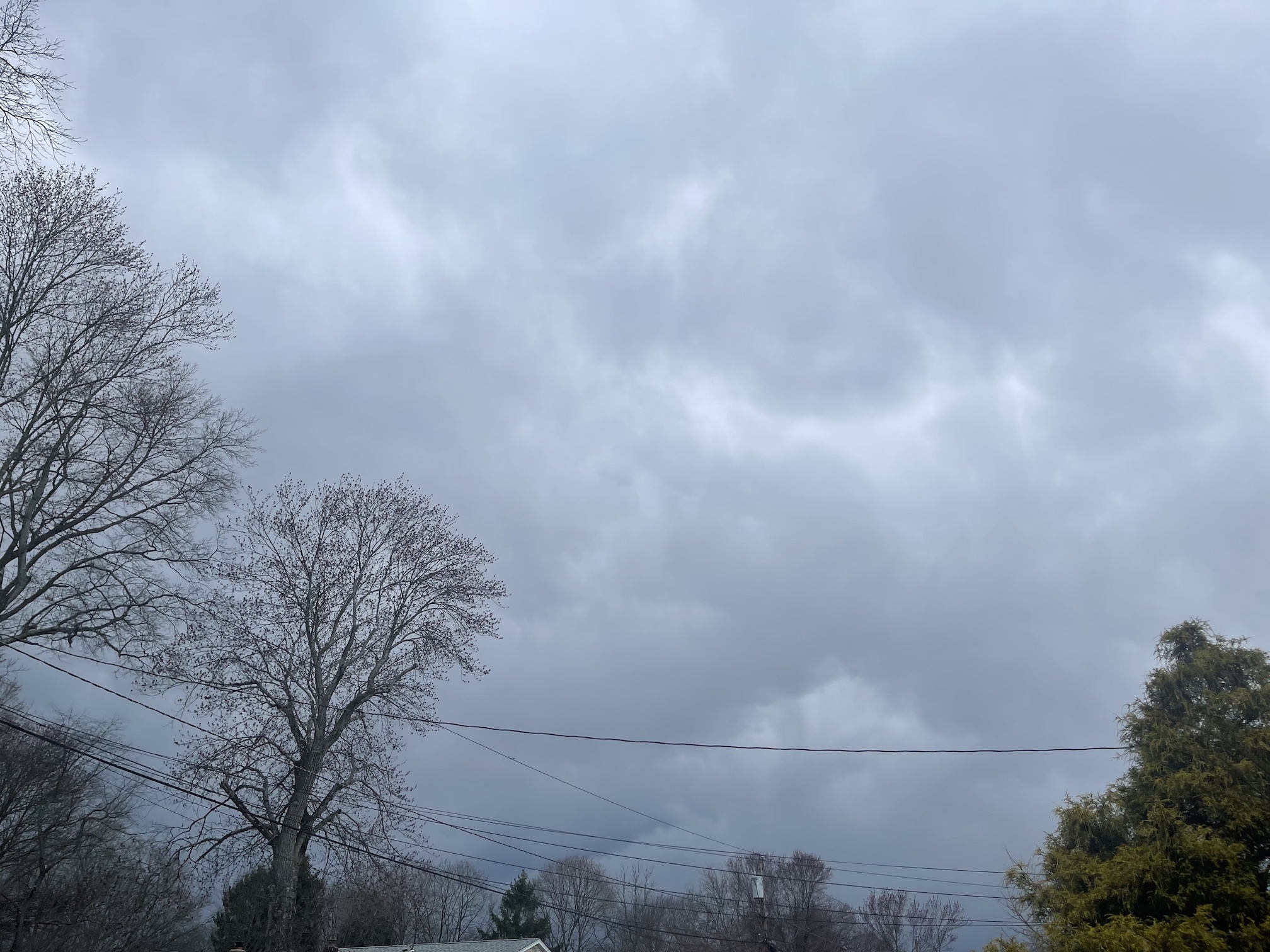
The flurries had been flying all across Northwestern Middlesex County since this morning, but the snowfall actually picked up in intensity along with the wind at about 3:00 PM this afternoon. The snow is covering power lines, and with the amount of stress that the power system has already taken from last week’s storm, any strong wind could disrupt power. The rough weather conditions are expected to last through this evening into Thursday.
There is some good news though. Very nice weather is expected for Friday into Sunday. After only a high in the low to mid 40s on Thursday, the mercury is expected to climb into the mid 50s by Friday, lower 60s by Saturday, and believe it or not, the upper 60s by Sunday.
Permalink
Comments off
11.06.12
Posted in Storm Track, Commentary, Storm Preparation, GWC News, Storm Safety, Model Forecasts at 7:09 am by gmachos
Timing Couldn’t Be Worse For Garden State Residents Trying To Recover From Sandy
Hurricane Sandy couldn’t have struck at a more worse time for the Mid-Atlantic and Northeast. The monster storm, which put a devastating hit on the Jersey Shore as well as Staten Island, Long Island, and Coastal Connecticut hit late in the hurricane season, and just as the winter season is beginning to wind up. Nor’easters are becoming more commonplace now including one that is taking shape to give Jersey and its neighbors a good pounding starting Wednesday and lasting into Thursday.
Forecast model guidance in the late afternoon on Monday hinted at not only a storm that would bring two inches of rain, 60 to 70 mile per hour winds along the coast, and coastal flooding, but also the first significant snowfall of the season according to Tri-State Weather. As much as 8 inches of snow was forecast for parts of the area with the heaviest snowfall occurring at around rush hour. Inland areas were going to get winds between 40 and 50 miles per hour, which is still not good for dangling power lines, weakened trees and telephone poles. Thankfully the late night and early morning model runs have the storm a little bit farther to the east, and not giving as big a blow as earlier.
There is still concern though. Forecasters are closely watching how this storm develops, and everything rides upon how the upper level low and the surface low come together. A vort max over the eastern part of the country has not dug far enough south, which is putting the storm on a forecast track further east. If the surface low can catch up to the upper low, then we could have a track more toward the coast, which would be insult to injury. If they do not come together, then the storm moves further to the east. Some towns along the Jersey Shore are not taking any chances.
In Brick Township, located in Ocean County, a mandatory evacuation has been issued in advance of the storm. Expect more of these to start rolling out as the day progresses on Tuesday. With much of the Garden State coastline in shambles, and another storm on the way, municipalities and the state government will take extra measures to ensure people’s safety. Hurricane Sandy and this approaching nor’easter could be the opening salvo in what could be a brutal winter. A few months ago, seasonal forecasts came out for the winter season in the Northeast, and there were indications that it would be a very bad winter in this region. Not the type of news residents along the Jersey Shore and the rest of the Mid-Atlantic need to hear right now while they try to pick up the pieces.
Permalink
Comments off
11.02.12
Posted in Storm Track, Storm Aftermath, Storm Preparation, GWC News at 8:47 am by gmachos
Possible Nor’easter Could Be In Store Next Week To Hamper Recovery
The timing of Superstorm Sandy couldn’t be worse. Coming in the last week of October, this hurricane/hybrid storm couldn’t have devastated the Jersey Shore, Southeastern New York, and coastal Connecticut at a worse time. The reason for that is the transition from summer to winter brings the development of nor’easters, especially as we get into late October and November. On top of that, there have already been forecasts out indicating that this coming winter could be a real bad one. Having more coastal storms will hamper recovery efforts.
Case in point, the Weather Channel indicated on Friday morning that another storm could be on the horizon for early next week. TWC points to computer models hinting at a Nor’easter that won’t be as strong as Sandy was, but still a nuisance with windy conditions accompanied by a cold rain. The American GFS model is indicating the storm will have a track just off the Mid-Atlantic coast while the European Model (ECMWF) is showing a more inland track that includes New Jersey. While the power is slowly coming back on for many Jersey residents (down to 1.5 million from 2.7 million at the storm’s peak), there are still many along the Jersey Shore without power, and already enduring cold nights over the past few days.
Temperatures aren’t expected to warm up anytime soon. Highs are going to be in the low 50s with morning lows in the mid to upper 30s through the weekend with temps dropping into the upper 40s by the middle of next week. Prior to Sandy, the weather had been quite mild this fall. Once the powerful storm came through though, it pulled down a lot of cold air from Canada, and conditions have become more normal for this time of year.
Permalink
Comments off
Posted in Storm Track, GWC News, Tracking the Tropics at 8:46 am by gmachos
Remnants Of Monster Storm Still Lingers Over Portions Of Canada
While much of the eastern half of the United States is trying to recover from Superstorm Sandy, the remnant low from the memorable storm is still spinning over parts of Canada. After coming ashore near Atlantic City, the storm system traveled slowly to the west through Pennsylvania before making a turn to the north and east. Now a remnant low, what was Sandy is still churning away over portions of Quebec and Ontario.
The storm has caused a good deal of damage in Canada while leaving two people dead there so far. Since forming ten days ago, Sandy and her remains have impacted Jamaica, Cuba, Haiti, Dominican Republic, Puerto Rico, the Bahamas, 17 states in the United States, and Canada. In the United States, the storm had an impact on approximately 60 million people, or one in every six Americans. It has left some 159 people state from the Caribbean to Canada, and early damage estimates are up to $50 billion dollars for the storm.
Permalink
Comments off
10.29.12
Posted in Storm Track, Commentary, Storm Preparation, Storm Warning, Storm Safety, Tracking the Tropics at 10:10 am by gmachos
Storm Strengthens, Makes Turn Toward Mid-Atlantic Coast, And Picks Up Speed
Upon waking up this morning, I could hear the winds picking up. The pressure had dropped to 29.38 inches of Hg, or about 995 millibars. However, that was a drop of nearly a half an inch since yesterday morning. The bigger news awaited me as I got to my computer and got on the internet. Sandy had strengthened. Winds had increased to 85 miles per hour while the barometric pressure had dropped to 946 millibars, or 27.94 inches of Hg. The storm had tightened up much like a figure skater does when he or she pulls in her arms. Hurricane force winds still extended some 175 miles from the eye while tropical storm force winds only reached out about 485 miles after being at 520 miles on Sunday.
Over the next few hours on Monday morning, another couple ingredients with Sandy began to come into play. The storm began to make its westerly turn toward the coast, and pick up in forward speed. So basically, we have a strengthening storm that is now moving toward the Mid-Atlantic coast as predicted, and is picking up in forward speed. The thing you don’t want to hear when trying to evacuate ahead of a hurricane is a strengthening storm that is moving faster. As of the 8:00 AM Advisory from the National Hurricane Center, Sandy was located about 265 miles to the Southeast of Atlantic City, New Jersey. Now moving to the North-Northwest at 20 miles per hour, we are anticipating a landfall sometime within the next 13 hours.
A record surge is expected in places such as New York Harbor, Sandy Hook, and other locations along the Jersey Shore. The forecast is calling for a surge between 6 to 11 feet in New York Harbor, Raritan Bay, and Long Island Sound. If the storm hits within the next 13 hours, it will make an impact around the time of high tide, which is already enhanced by the presence of the full moon. You couldn’t ask for worse timing. Another thing to keep in mind with the surge along the Jersey Shore, Raritan Bay, New York Harbor, and Long Island Sound, and that is the fact that the coastline of New Jersey and New York meet at right angle, which will help funnel in the water to New York City, and Northeastern New Jersey. Winds are expected to gust between 60 and 80 miles per hour, and the National Hurricane Center has indicated that Sandy could strengthen to 90 miles per hour.
The worst of the weather is expected to begin around mid-afternoon, or about 2:00 to 3:00 PM EDT. Winds, which are already gusting between 30 and 50 miles per hour, are expected to ramp up significantly at that time along with the rain. Here in South Plainfield, the pressure has fallen further to 29.21 inches of Hg, or about 989 millibars. Already about a quarter of an inch has fallen from the storm. Winds have been steady at 20 miles per hour with gusts to 40 miles per hour. Oh, by the way, if you are in the Great Lakes region, you’re not going to be immune from this storm with cold air being pulled down, the storm is expected to bring snow to parts of the Appalachians including West Virginia and Western Virginia.
You know this is a different animal when a tropical system is going to bring snow on its western flank.
Permalink
Comments off
10.25.12
Posted in Storm Track, Commentary, GWC News, Hurricane Anomalies, Tracking the Tropics, Model Forecasts at 9:28 pm by gmachos
Hurricane Sandy To Morph Into Landfalling Perfect Storm
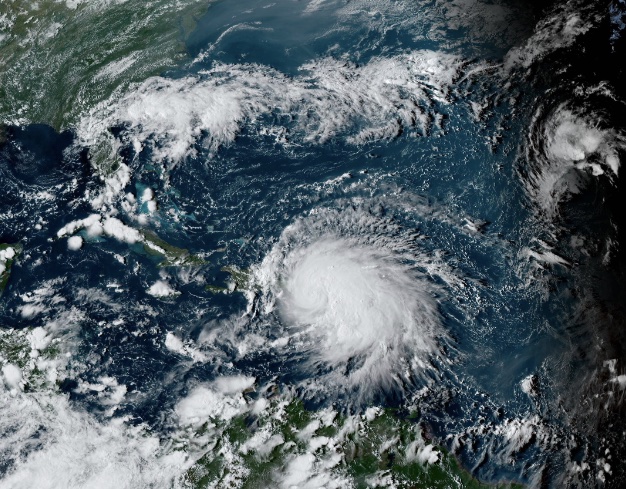
It has been 21 years almost to the day of the Perfect Storm, and 58 years since Hurricane Hazel came roaring into the Mid-Atlantic. Now, the Northeastern United States is looking at a possible landfall from one of the more rare and powerful storms to make a left turn into the region in recorded history. Hurricane Sandy first developed in the Caribbean on Monday as the 18th named storm of the 2012 Atlantic Hurricane Season. Since that time, the storm has grown to near major hurricane strength.
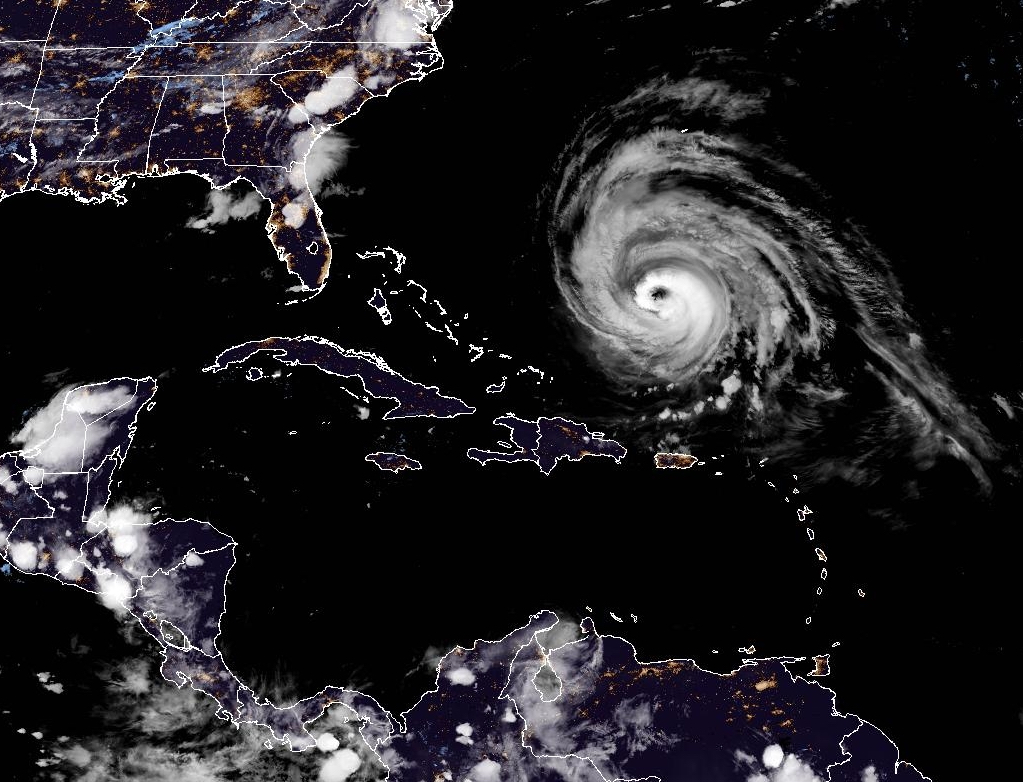
Sandy significantly strengthened on Wednesday from a strong tropical storm to high end Category Two Hurricane with winds of 110 miles per hour as it approached the southeastern coast of Cuba. The storm has weakened a bit since crossing Cuba and moving into the Bahamas, but the storm is going through changes that could make it even more devastating. The environment around Sandy has a cold front to the west, and a dip in the jet stream that will allow this hurricane to morph into a hybrid storm combining elements of a nor’easter and a tropical cyclone.
Hurricanes are much different than the usual storms we see here in the Northeast. They are warm core and barotropic systems, which means that they have warm air around the center of circulation, or the eye, and have a cloud structure profile that is completely vertical. The upper level and surface low pressures in a hurricane are stacked on top of each other, which is not the case for nor’easters, or what meteorologists define as a Mid-Latitude Cyclone. Storms that usually effect the Northeast are cold core lows and baroclinic.
Mid-Latitude Cyclones have cold air around the area of low pressure, and the cloud structure is sloped or slanted because the upper level low and surface low are not on top of each other. Nor’easters tend to like wind shear, or wind going in different directions at different heights of the atmosphere, involved because of this while hurricanes do not like shear at all. Another difference between hurricanes and nor’easters is the wind field. Hurricanes tend to have the strongest winds near its core while nor’easters have winds cover more larger area.
With all of this in mind, we return to Sandy, a storm that is about to undergo a radical transformation from a storm system that has a warm core and is baroptric in nature to one that has more of a cold core and is more baroclinic in nature. To what degree this transformation goes remains to be seen, but already Sandy’s wind field is expanding. As of 8:00 PM this evening, hurricane force winds extend some 35 miles from the center while tropical storm force winds reach out some 205 miles. Pressure is already low at 965 millibars, or 28.50 inches of Hg.
So, we have significantly low pressure with Sandy, a cold front approaching from the west, a significant dip in the jet stream, and a lot of warm moist air ahead of the front over the Northeast and Mid-Atlantic. It was been a fairly mild and humid autumn so far in New Jersey. True, there have been some days of chilly weather with the first frost happening a couple weeks or so ago, but overall, temperatures have been quite mild. Put all of these ingredients together, and mother nature has quite a storm to cook up.
Currently, Sandy is moving through the Bahamas. The most recent advisory on Thursday evening had the storm centered between Cat and Eleuthera island in the Bahamas. Winds have decreased since late last night from 110 miles per hour to 100 miles per hour, and the pressure has risen a bit, but don’t be fooled by this. As Sandy approaches the Mid-Atlantic and Northeast early next week, it will still be quite a potent storm, maintaining much of its strength as it moves over the warm water of the Gulf Stream, and generating energy as a result of its transformation into a hybrid storm.
Changing to more of a cold core or baroclinic storm will require some transfer of energy. This transfer of energy will make what is left of Sandy more powerful and dangerous. The storm will also grow in size thanks to its larger wind field so a large area of strong winds will be felt in the Northeast and Mid-Atlantic. Have we seen such a circumstance where this has happened before? The answer is yes. Back in late October 1991, the Perfect Storm developed from the combination of a cold front, a strong jet stream, and Hurricane Grace, a Category One storm that formed near Bermuda. However, that storm never made landfall. This one has a very strong likelihood of landfall somewhere from Delaware Bay to Maine.
The latest forecast models are coming closer together on a track for this potentially powerful and dangerous storm. Earlier in the week, the GFS (American model) and ECMWF (European Model) were a bit apart on a forecast track. The GFS had the storm coming ashore somewhere in Maine while the ECMWF had it moving into Delaware Bay. Now, they are much closer together with the European still moving through the Mid-Atlantic near Delaware Bay while the GFS is further south with an impact along the Jersey Shore. Both of these scenarios do not bode well for the Northeast.
After dodging a bullet with Irene back in August 2011, the Northeast and Mid-Atlantic States could be staring down at a monster of a storm early next week. A region that has been long overdue for a powerful storm may be making up for lost time come Monday or Tuesday.
Permalink
Comments off
09.04.12
Posted in Storm Track, GWC News, Tracking the Tropics at 4:24 pm by gmachos
Remains Of Isaac Finally Arrive; Flash Flood Warnings In Effect For Portions Of Garden State
Depending upon where you are on this Tuesday afternoon, there is either a lot of rain, very little, or none to this point. However, the effects of what was Hurricane Isaac are now moving into the Garden State. Over the past several days, conditions have been dark and menacing around Central Jersey, but there hasn’t been a lot of rain until now. Northwestern Middlesex County had only seen about three tenths of an inch from Sunday until now.
However, if you travel to the south and west of South Plainfield, Dunellen, Middlesex, and Piscataway, you find that there is plenty of rain. Shower and thunderstorm activity is lighting up the radar across Ocean County where a Flash Flood Warning is in effect. There was also a Tornado Warning issued earlier for the extreme southern part of the county. More Flash Flood Warnings are in effect in Monmouth, Mercer, and Burlington counties.
Meanwhile in Middlesex County, a Flood Advisory has been issued as a batch of slow moving showers and thunderstorms pushed through the Lehigh Valley in Pennsylvania into Morris County, New Jersey. Moving at 15 miles per hour, this batch of rain could dump up to an inch of rain in just a short amount of time. Some areas could see up to 2 inches. Yesterday, forecasts indicated anywhere from 2 to 4 inches were possible on Tuesday and Wednesday as Isaac combines with a frontal boundary to produce periodic downpours.
Permalink
Comments off
09.02.12
Posted in Storm Track, GWC News, Tracking the Tropics at 12:23 am by gmachos
Rains From Isaac’s Remains To Combine With Dangerous Surf From Kirk And Leslie
The nice summer weather over the past two days in New Jersey is about to come to a halt. By land, sea, and air, the Garden State will begin to be under siege from the remains of one tropical system, and long period swells from two active systems. Over the past week, Hurricane Isaac made landfall in Louisiana while Kirk became a Category Two storm and Leslie reached just below hurricane strength.
All three will have some sort of impact on New Jersey over the next few days. Weather is expected to start going downhill during the afternoon on Sunday as clouds will begin to move in from the west as the remnants of Isaac approach. Those remains will combine with a frontal boundary that will stall just to the south of the area. This will set the stage for several waves of low pressure to ride along the front and bring rain to Jersey. The inclement weather is expected to last until mid-week.
Meanwhile, at beaches along the Jersey Shore, there will be a moderate risk of rip currents and dangerous surf thanks to swells from Kirk and Leslie. The swells from Kirk are forecast to arrive on Sunday, and last into Monday. Then, Leslie’s swells will pick up from there, and linger as the storm spins in the Western Atlantic to the Northeast of the Lesser Antilles. Leslie has begun moving to the Northwest after moving West to West-Northwest the past several days.
The official NHC forecast track has Leslie moving to the north over the next three to five days, and be in the vicinity of Bermuda by Thursday. By that time, Leslie is projected to become a hurricane with 80 mile per hour winds.
Permalink
Comments off
08.31.12
Posted in Storm Track, GWC News, Tracking the Tropics at 10:36 pm by gmachos
Remains Of Tropical System To Combine With Frontal Boundary To Bring Rains To Jersey Starting Sunday
Enjoy the nice weather on Saturday because the last half of the Labor Day Weekend could be quite a wet one for South Plainfield and the rest of New Jersey. The remains of Hurricane Isaac will be heading this way, and should arrive sometime on Sunday. The rains are expected to linger around the Garden State until Tuesday.
Labor Day is traditionally a big day around Northwestern Middlesex County. South Plainfield has its annual Labor Day Parade, which brings people from all over the state as well as many political figures with the start of an important election season. However, it appears that mother nature may not cooperate this year.
As of right now, the National Weather Service Office in Mount Holly is giving a 20 to 30 percent chance of showers from Sunday into Monday. The probabilities increase to 50 and 60 percent as we move into Tuesday and Wednesday. Isaac was a slow moving Category One Hurricane with 85 mile per hour winds prior to making to landfalls in Louisiana earlier this week. The storm dumped between 10 and 20 inches in some parts of the Northern Gulf states.
After finally moving out of Louisiana on Thursday, Isaac’s remains have spread northward into drought stricken Arkansas and Missouri, and is forecast to head east into more rain thirsty states such as Iowa, Illinois, Indiana, and Ohio. Rainfall amounts in the Mid-Mississippi and Ohio Valleys are expected to run between 3 to 5 inches with some areas getting as much as 8 inches.
Permalink
Comments off
08.30.12
Posted in Storm Track, Tracking the Tropics at 6:52 pm by gmachos
Isaac May Be Leaving, But Kirk And Leslie Are Keeping Things Busy
The National Hurricane Center issued its last advisory on Tropical Depression Isaac as of 5:00 PM EDT on Thursday. However, there are still other storms churning in the Atlantic. The tropics are far from done.
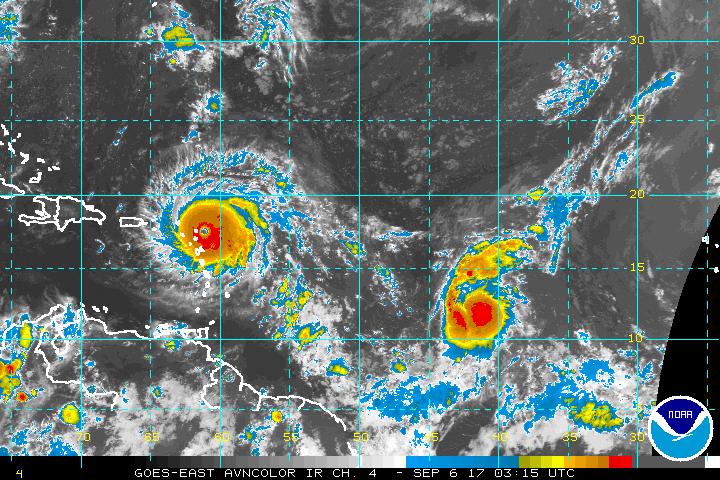
As Isaac closed in on landfall across Southern Louisiana on Tuesday afternoon, Kirk emerged in the Central Atlantic as a depression, and has grown considerably over the past 48 hours. The latest advisory on the fifth hurricane of the 2012 season has winds increasing to 90 miles per hour making it a strong Category One Hurricane on the Saffir-Simpson Scale. The good news is that Kirk, which is located some 1,065 miles from the Northern Leeward Islands, is not expected to impact the United States.
Further to the south in the Central Atlantic is our latest tropical system. Tropical Storm Leslie developed during the late morning hours on Tuesday, and within several hours became the 12th named storm of the 2012 Atlantic Hurricane Season. Leslie has continued to strengthen too with winds increasing to 45 miles per hour as of the 5:00 PM EDT Advisory from the National Hurricane Center.
The latest forecast discussion on the storm calls for Leslie to strengthen further to a Category Two Hurricane by 72 hours, and remaining at that intensity through five days. Most indications are showing Leslie staying far away from the East Coast of the United States thanks to a trough developing in the Western Atlantic that will force the subtropical ridge to retreat. Leslie is expected to exploit the weakness in the ridge, and turn northward.
With the developments of Kirk and Leslie, we now have 12 named storms and 5 hurricanes. Last week, the formation of Joyce equaled the mark set in 1995 for the earliest forming J storm. Now, the emergence of Leslie was the second earliest forming L storm ever behind Luis from 1995. The number of named storms and hurricanes to date this year have actually equaled or exceeded those in 2005, which was the busiest season on record. Fortunately, none of the hurricanes thus far have become major storms of Category Three strength or better, but as Isaac has shown, minimal hurricanes can cause damage too.
Considering that early seasonal forecasts had indicated a less active season, and no storms fired up during the month of July, it is quite remarkable that this season is rivaling the numbers posted by the 2005 season.
Permalink
Comments off
« Previous entries ·