10.29.12
Posted in Storm Track, Commentary, Storm Preparation, Storm Warning, Storm Safety, Tracking the Tropics at 10:10 am by gmachos
Storm Strengthens, Makes Turn Toward Mid-Atlantic Coast, And Picks Up Speed
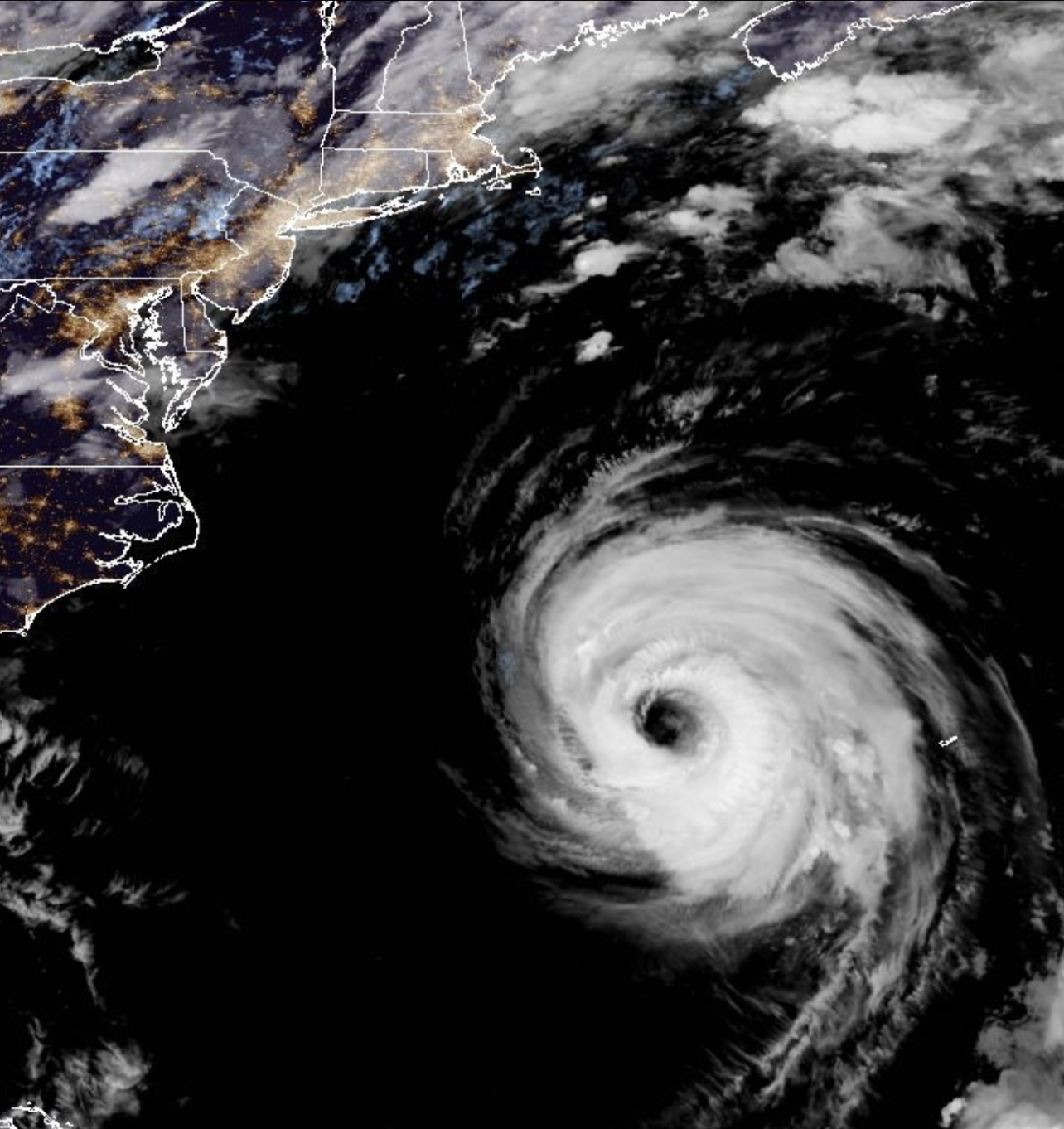
Upon waking up this morning, I could hear the winds picking up. The pressure had dropped to 29.38 inches of Hg, or about 995 millibars. However, that was a drop of nearly a half an inch since yesterday morning. The bigger news awaited me as I got to my computer and got on the internet. Sandy had strengthened. Winds had increased to 85 miles per hour while the barometric pressure had dropped to 946 millibars, or 27.94 inches of Hg. The storm had tightened up much like a figure skater does when he or she pulls in her arms. Hurricane force winds still extended some 175 miles from the eye while tropical storm force winds only reached out about 485 miles after being at 520 miles on Sunday.
Over the next few hours on Monday morning, another couple ingredients with Sandy began to come into play. The storm began to make its westerly turn toward the coast, and pick up in forward speed. So basically, we have a strengthening storm that is now moving toward the Mid-Atlantic coast as predicted, and is picking up in forward speed. The thing you don’t want to hear when trying to evacuate ahead of a hurricane is a strengthening storm that is moving faster. As of the 8:00 AM Advisory from the National Hurricane Center, Sandy was located about 265 miles to the Southeast of Atlantic City, New Jersey. Now moving to the North-Northwest at 20 miles per hour, we are anticipating a landfall sometime within the next 13 hours.
A record surge is expected in places such as New York Harbor, Sandy Hook, and other locations along the Jersey Shore. The forecast is calling for a surge between 6 to 11 feet in New York Harbor, Raritan Bay, and Long Island Sound. If the storm hits within the next 13 hours, it will make an impact around the time of high tide, which is already enhanced by the presence of the full moon. You couldn’t ask for worse timing. Another thing to keep in mind with the surge along the Jersey Shore, Raritan Bay, New York Harbor, and Long Island Sound, and that is the fact that the coastline of New Jersey and New York meet at right angle, which will help funnel in the water to New York City, and Northeastern New Jersey. Winds are expected to gust between 60 and 80 miles per hour, and the National Hurricane Center has indicated that Sandy could strengthen to 90 miles per hour.
The worst of the weather is expected to begin around mid-afternoon, or about 2:00 to 3:00 PM EDT. Winds, which are already gusting between 30 and 50 miles per hour, are expected to ramp up significantly at that time along with the rain. Here in South Plainfield, the pressure has fallen further to 29.21 inches of Hg, or about 989 millibars. Already about a quarter of an inch has fallen from the storm. Winds have been steady at 20 miles per hour with gusts to 40 miles per hour. Oh, by the way, if you are in the Great Lakes region, you’re not going to be immune from this storm with cold air being pulled down, the storm is expected to bring snow to parts of the Appalachians including West Virginia and Western Virginia.
You know this is a different animal when a tropical system is going to bring snow on its western flank.
Permalink
Comments off
08.31.12
Posted in Eastern Pacific, Storm Warning, Tracking the Tropics at 9:32 pm by gmachos
Ninth Storm Strengthens To Category One Hurricane Before Weakening
While the Atlantic has really picked things up with eight named storms and four hurricanes this month, the Eastern Pacific has waned with only three storms and two hurricanes. Prior to Ileana developing this week, the EPAC went without a storm or hurricane for 10 days after Tropical Storm Hector faded from view in mid-August.
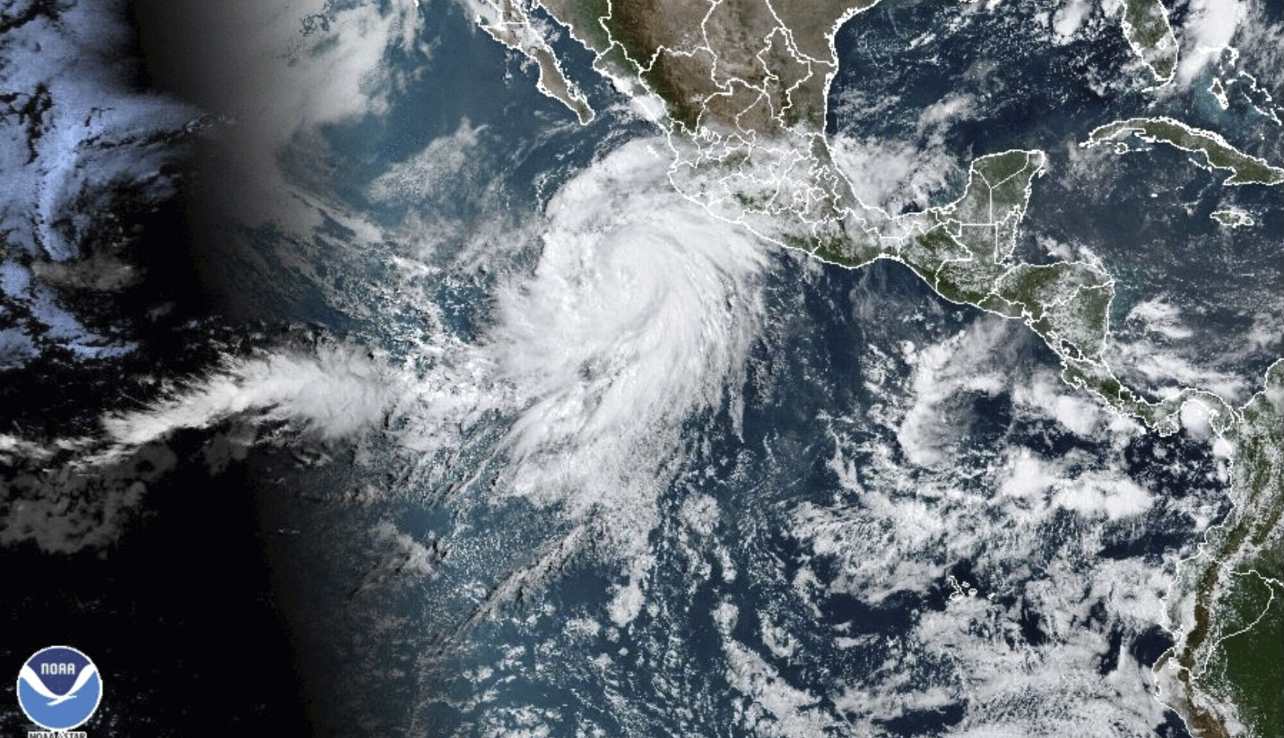
Ileana became the season’s ninth named storm on the evening of August 27th some six hours after emerging as a tropical depression. Forming approximately 330 miles to the southwest of Manzanillo, Mexico, or about 530 miles to the south-southeast of Baja California, the storm was no threat to land, but gradually strengthened to become the seventh hurricane of the season.
The storm peaked in intensity on Thursday when it strengthened to have 85 mile per hour winds. However, like most systems in the East Pacific, Ileana began to encounter cooler waters, and has gradually weakened to below minimal hurricane strength with winds of 70 miles per hour. According to the most recent advisory on the storm, Ileana is forecast to weaken to a tropical depression sometime this weekend.
So far this season, the Eastern Pacific has had 9 named storms, 7 hurricanes, and 3 major hurricanes. Meanwhile, the Atlantic has had 12 named storms, 5 hurricanes, and no major hurricanes. A major hurricane is one that has maximum sustained winds of at least 111 miles per hour, or minimal Category Three strength on the Saffir-Simpson Scale. Despite early season forecasts indicating that an El Nino would develop making conditions for favorable for development in the Eastern Pacific, and less favorable in the Atlantic, the two basins have had exact opposite seasons.
Permalink
Comments off
08.28.12
Posted in Storm Track, Commentary, Storm Warning, Tracking the Tropics at 1:06 am by gmachos
Storm Continues To Flirt With Intensification, But Still Shy Of Being A Hurricane
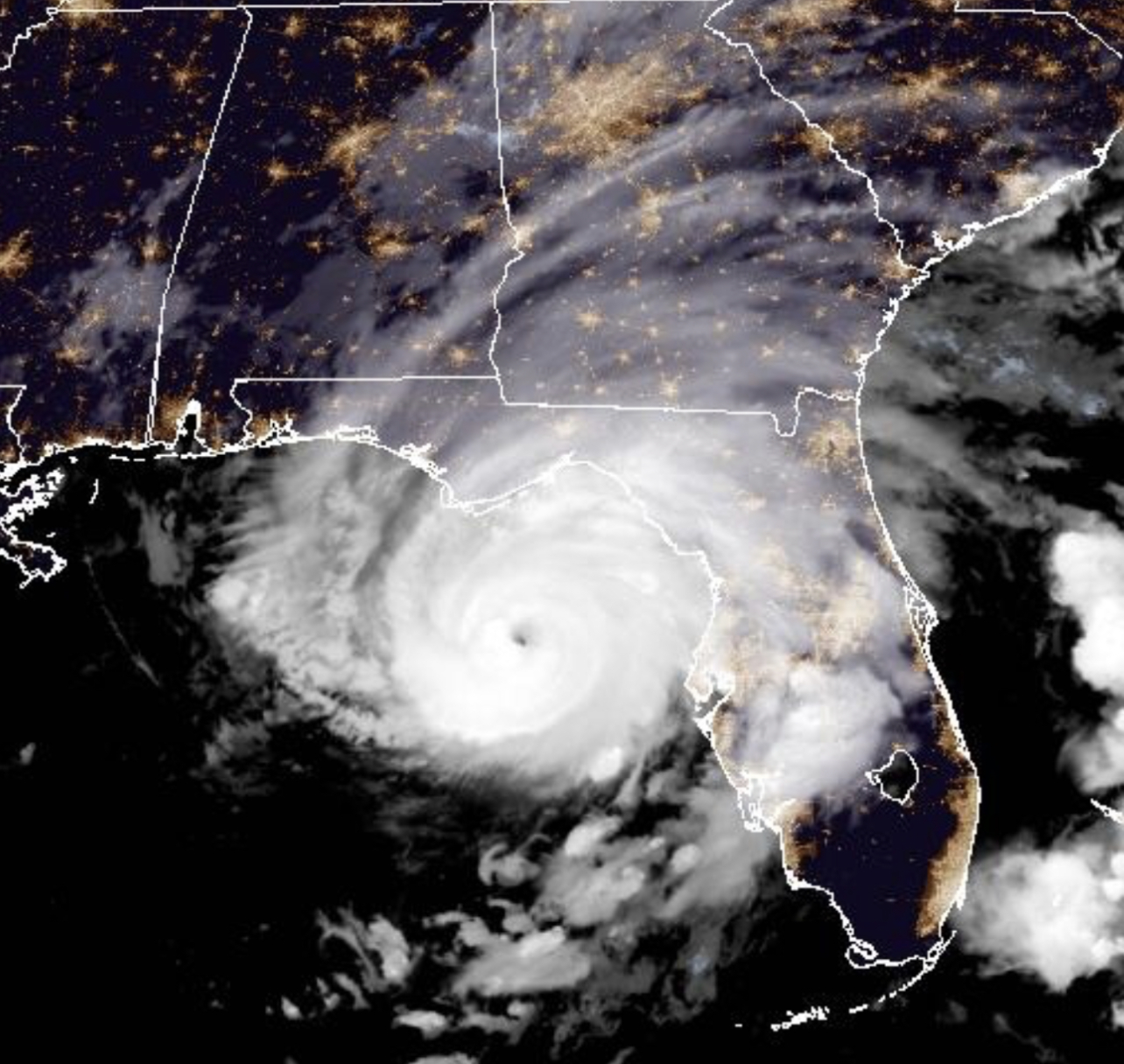
Despite all of the fanfare and the numerous opportunities, Tropical Storm Isaac remains just that…a tropical storm. The system has undergone some slight strengthening since this time last night. Minimum central pressure has fallen about 14 millibars including two with the last advisory at 11:00 PM EDT, or 10:00 PM CDT on Monday night while maximum sustained winds have crept up to just below minimal hurricane force at 70 miles per hour.
However, Isaac is still not quite there. The overall circulation remains lopsided. Now, the bulk of the convection is in the southern half of the storm. Last night, it was in the northern and eastern side. Isaac is still battling a lot of dry air. Quite similar to what happened with Hurricane Irene last year after it pass through the Bahamas, and then showed brief signs of strengthening. As with Irene, the dry air could be the savior here for the Big Easy and the rest of the Northern Gulf Coast.
Now located some 200 miles or so from the mouth of the Mississippi River, and slowing down to only move at a forward speed of just 10 miles per hour, Isaac still has a good deal of time to strengthen, especially over the very warm waters of the Gulf. The NHC is calling for the storm to intensify to a strong Category One Hurricane on the Saffir-Simpson Scale with 90 mile per hour winds. There could be an outside chance of it reaching Cat Two, but that opportunity is fading.
Isaac is still a very vast storm system with tropical storm force winds extending some 200 plus miles from the center of circulation. Feeder bands from the storm have been even pushing rain ashore in parts of South Carolina and Georgia up to 750 miles away from Isaac’s center. Pressure is also very low for even a strong tropical storm like Isaac at 979 millibars. Pressure like that is often seen in Category Two Hurricanes. There are other indicators that point to the storm getting better organized. Hurricane Hunter aircraft is indicating that the mid-level low is now moving over the top of the surface low making the storm more vertically stacked, which is a sign of strengthening.
Thunderstorm activity is again developing around the center of circulation, but we’ve seen this before with Isaac. All through its lifetime, it has been teasing us with these signs of strengthening, and then leveling off, or even weakening. The storm appears to be moving in a westerly direction, but forecast models and forecast analysis indicates that a trough over the Midwestern United States should push eastward, and cause the ridge off the East Coast of the United States to retreat, which will create a weakness over the Northern Gulf states that Isaac will exploit.
Permalink
Comments off
08.27.12
Posted in Storm Track, Commentary, Storm Warning, Storm Safety, Tracking the Tropics at 8:34 am by gmachos
Storm Appears To Be Trying To Form An Eye; Pressure Falls Five Millibars This Morning
Hurricaneville continues to monitor Tropical Storm Isaac as it moves through the Gulf of Mexico. The storm has had a long history of teasing the experts and the rest of us by having flare ups during the course of its day only to level off, and even in some cases wane. Isaac has been battling dry air throughout most of its lifetime. Most recently, the dry air is being fed into the storm from an upper level low over the Yucatan Peninsula.
On Monday morning, however, there appear to be signs of intensification finally taking place in the storm. The latest radar imagery courtesy of the Weather Channel is showing an eye trying to form in the circulation. In addition, the 8:00 AM Advisory from the National Hurricane Center indicates a pressure drop to 988 millibars. Less than twelve hours ago, the pressure had increased to 993 millibars. Could this be another tease by the storm. All depends on how much moisture can begin to get into the southern side of the circulation.
The storm is now within optimal conditions for strengthening with the warm waters in the Gulf of Mexico ranging between 85 and 87 degrees, which is well above the required 80 degrees for intensification. In addition, upper level winds are relatively light. The problem for Isaac has been that it has not been able to form a well defined core, and get that rapid intensification engine going because it has been constantly plagued by the dry air. Since the storm has not been able to strengthen into a hurricane, the NHC’s latest forecast discussion (5:00 AM EDT on August 27th) has backed off its projection of a Category Two storm by landfall.
Will Isaac get its act together this time? This is the question of the day for those tracking the storm.
Permalink
Comments off
08.26.12
Posted in Storm Track, Commentary, Storm History, Storm Warning, Tracking the Tropics at 11:39 pm by gmachos
Westward Shift In Track Has Isaac Making Landfall Along Northern Gulf Around Anniversary Of Katrina
Four years ago around this time, the city of New Orleans was under the gun thanks to Hurricane Gustav, which had strengthened to near Category Five intensity prior to landfall in Western Cuba. It was a harsh reminder of the pain inflicted on this city from Hurricane Katrina just three years before. The Big Easy was eventually able to dodge that bullet as Gustav weakened to a Category Two storm prior to landfall over Cocodrie, Louisiana.
NOLA experienced another similar threat a few years prior to Katrina when Hurricane Lili made a move toward the Crescent City in the 2002 Atlantic Hurricane Season. However, the storm thankfully weakened from a Category Four storm to a Category Two system before making landfall along the western edge of Vermillion Bay. With Lake Pontchartrain, Lake Murepas, the Mississippi River, and the Gulf of Mexico surrounding it, New Orleans, which also sits below sea level is always susceptible to hurricanes.
The threat is back on again as Tropical Storm Isaac’s forecast track has gradually taken a more westward shift over the past few days. The storm has recently emerged in the Southeastern Gulf of Mexico to the southwest of Key West. Now, there is nothing but the warm water of the Gulf between the storm and New Orleans as well as coastal Mississippi towns such as Bay St. Louis, Gulfport, Pass Christian, and Biloxi. Besides the irony of the forecast track and timing, another similarity between Katrina and Isaac has been the size of the storms. Issac is a very vast system much like Katrina was, and that could lead to high seas, waves, and storm surge along the coast at these parts come mid-week.
The saving grace right now is the fact that the dry air flowing in from the southwest is preventing Isaac from getting its act together. By the time Katrina had left Key West and the rest of the Florida Keys, the storm was well formed and already deepening. Isaac is still very disorganized with a lopsided shape and structure thanks to the lack of moisture on its southern half to feed its heat engine. However, things could change if the upper level low responsible for the dry air entrainment on the south side of Isaac pulls away from the storm and allows it to develop more moist air on its southern half. With the high octane waters of the Gulf as well as light upper level winds, the ingredients are there for significant strengthening if Isaac can get better organized.
Katrina was the deadliest storm to hit the U.S. mainland in decades with some 1,800 people dead. Once a Category Five storm, and one of the strongest storms on record in the Atlantic, Katrina came ashore as a strong Category Three storm near Buras, Louisiana before making a second landfall along the Louisiana and Mississippi border. The devastation caused by a record storm surge, the highest ever recorded in North America, made Katrina the costliest hurricane and natural disaster in U.S. history, shattering the previous mark set by Hurricane Andrew in 1992.
Permalink
Comments off
Posted in Storm Track, Commentary, Storm Preparation, Storm Warning, Storm Safety, Tracking the Tropics at 10:40 pm by gmachos
Storm Could Get As Strong As Category Two At Landfall Along Northern Gulf Coast
On Sunday, Tropical Storm Isaac spent the entire day lashing South Florida and the Keys with its 60 to 65 mile per hour winds. Fortunately, forecasts that called for the storm to become a hurricane prior to moving through the Florida Keys didn’t come to pass. Now, Isaac is moving into the Gulf of Mexico with no land masses to interact with prior to making a landfall along the Northern Gulf coast by the middle of the week.
Since it has been in the Eastern Caribbean, Isaac has struggled to get its act together. Battling dry air, an upper level low in the Western Caribbean and Yucatan Peninsula, and the rugged terrain of Hispaniola and Cuba, the vast storm system has not been able to get strong enough to become the season’s fourth hurricane. Much of the precipitation has been staying to the north of the center of circulation as the upper low is pushing dry air into the southern side of the storm. As a result, the storm is asymmetric in shape.
With Isaac moving into the Southeastern Gulf, shower and thunderstorm activity has increased on the northern side. If the upper level low over the Yucatan can move away from the storm, there will be plenty of warm water and optimal upper level conditions for intensification. The National Hurricane Center has been indicating in their forecast discussions that Isaac could strengthen to a Category Two Hurricane on the Saffir-Simpson Scale with 100 mile per hour winds by the time it makes landfall.
Another trend that has been developing is a more westward forecast track with the storm. Late last week and into this weekend, the models had been indicating an impact further to the east along the Northeastern Gulf from the Florida Panhandle southward to places such as Tampa along the West Coast of Florida. Little by little though the track has been shifting to the left. Now, the storm could make landfall anywhere along the Northern Gulf coast from Louisiana to the Florida Panhandle. The timing of the landfall appears to be some time mid-week, which would be ironic for New Orleans, which was impacted by Hurricane Katrina seven years to the day on Wednesday.
Currently, Isaac is located about 60 miles Southwest of Key West, Florida, or about 530 miles to the Southeast of the Mouth of the Mississippi River. The storm is moving to the West-Northwest at 15 miles per hour, and has maximum sustained winds of 65 miles per hour. Winds are gusting to near hurricane force. Barometric pressure has fallen some 9 millibars in the past 20 hours to 991 millibars or 29.26 inches of Hg, and the winds have increased five miles per hour from earlier in the day. Isaac is a large storm with tropical storm force winds extending some 200 miles from the center of circulation. The size of the storm is a big concern for forecasters since Isaac’s vast circulation will likely create high seas, storm surge, and waves along the coast prior to coming ashore.
Taking a look at the watches and warnings, a Hurricane Warning is out for the North Central Gulf coast from Morgan City, Louisiana eastward to Destin, Florida including New Orleans, Lake Pontchartrain, and Lake Murepas. A Hurricane Watch is in effect from east of Destin, Florida to Indian Pass, Florida. Tropical Storm Warnings are in effect along the Florida Peninsula from Sebastian Inlet southward on the East Coast and from Tarpon Springs southward on the West Coast, the Florida Keys including the Dry Tortugas and Florida Bay, Lake Okeechobee, and from east of Destin, Florida to the Suwanee River.
Isaac does show some signs of strengthening. However, previous attempts have ended up just being a tease. Thunderstorms would flare up for a few hours near the center of circulation, but then level off. This latest flare up has lasted some four to five hours now, and it could persist, which would be an indication of strengthening. Again, the storm’s core is lopsided due to the dry air entrainment into the system from the upper level low over the Yucatan. If the low could move further away from Isaac, less dry air would get in on the south side, and the air would moisten from the water vapor generated by the very warm waters of the Gulf (running 85 to 87 degrees).
While the forecast track is showing a more westward track to landfall along the Northern Gulf coast, there is some discrepancy between the models as to where exactly Isaac will make an impact. The European (ECMWF), UKMET, and GFS models are about 300 miles apart with the GFS taking the most western route by having the storm move over the Southwestern part of Louisiana, which is a worst case scenario for New Orleans since the city will be on the eastern side of the storm. The ECMWF is showing a landfall in Alabama, which would mean that the Big Easy would be on the western or more weaker side of the storm.
Already, the storm has left behind a toll. On the island of Hispanola, which includes Haiti and the Dominican Republic, at least 10 people are dead according to the Huffington Post. Hundreds of homes were damaged by the storm in the Dominican Republic, and many people had to brave the elements in Haiti, where most are living in tents outside Port Au-Prince following an earthquake there several years ago. The Haitian government reported a dozen homes were destroyed by the storm and some 270 were damaged.
Permalink
Comments off
08.24.12
Posted in Storm Track, Commentary, Storm Preparation, Storm Warning, Storm Safety, Tracking the Tropics, Model Forecasts at 9:04 pm by gmachos
Storm Gradually Gains Strength On Friday As It Nears Hispaniola
Tropical Storm Isaac is gradually gaining strength as it moves through the Central Caribbean toward the southwestern coast of Haiti on this Friday night. The storm, which still remains somewhat disorganized thanks to some dry air getting into its western flank, has been slowly strengthening all day today with winds increasing to 60 miles per hour by 11:00 AM EDT, and then going up to 65 miles per hour by 5:00 PM EDT.
Maximum sustained winds with Isaac remain at 65 miles per hour with gusts of minimal hurricane force. Minimum central pressure is down to 29.29 inches of Hg or 992 millibars, which is actually down two millibars from the late afternoon advisory.
The satellite imagery shows a storm that has done a bit of a 360 in the past 24 hours or so. Yesterday at this time, much of the convection was on the western side of the storm. Now, it is on the usually more stronger eastern side. There is good outflow, or exhaust from the storm except for the northwestern part, and that is where the dry air appears to be getting into the system. There has been a trough to the west of Isaac as well, and that may be contributing to the storms continued struggles. Now, it is beginning to interact with the rugged terrain of Hispaniola, which has mountains as high as 10,000 feet on the Dominican Republic side.
The interaction between these mountains and Isaac will cause orographic lifting of the tropical air to take place, and that will cause tremendous condensation and torrential rains. Streams of moisture have already been flowing into the southern portion of the Dominican Republic. Those rains and more are expected to impact Haiti, where many are still living in tents around Port Au-Prince following the deadly and devastating earthquake there several years ago. Currently, Isaac is located some 165 miles south-southwest of Santo Domingo, the capital of the Dominican Republic, or about 185 miles to the south-southeast of Port Au-Prince.
The big story is that the storm has slowed down, which also adds to the fears of significant flooding and mudslides across Haiti and the Dominican Republic. The National Hurricane Center has Isaac currently moving at 10 miles per hour, which is down from 16 miles per hour just a few hours ago. Consequently, the NHC is forecasting some 8 to 12 inches of rain for Hispaniola with some areas receiving 20 inches. Further to the west across Cuba and even Jamaica, some 4 to 8 inches are expected with isolated areas getting up to a foot of rain. Puerto Rico is still receiving rain, and could get up between 2 to 4 inches with some remote locations seeing 6 more inches.
There are a lot of watches and warnings out for this storm. Currently a Hurricane Watch is in effect for Haiti. A Tropical Storm Warning is in effect for the Dominican Republic, Haiti, the Cuban provinces of Ciego de Avila, Sanctus Spiritus, Villa Clara, Camaguey, Las Tunas, Granma, Holguin, Santiago de Cuba, and Guantanamo, Andros Island in the Bahamas, the Central Bahamas including Cat Island, The Exumas, Long Island, Rum Cay, and San Salvador, the Southeastern Bahamas including the Acklins, Crooked Island, Long Cay, the Inaguas, Mayaguana, and the Ragged Islands as well as the Turks and Caicos.
Tropical Storm Watches were first issued for the United States mainland during the 5:00 PM EDT Advisory. Now, they are in effect for the provinces of Matanzas and Cienfuegos in Cuba, Jamaica, the Northwestern Bahamas including the Abacos Islands, the Berry Islands, Bimini, Eleuthera, Grand Bahama Island, and New Providence, the Florida Keys including the Dry Tortugas, the East Coast of Florida south of Jupiter Inlet, the West Coast of Florida south of Bonita Beach, Florida Bay and Lake Okeechobee.
Looking at the most recent model runs of the GFS, GFDL, ECMWF, and HWRF, there is a general northwestward track with the GFS being the furthest east, and the ECMWRF being the furthest west but they all show an impact in South Florida, and a second landfall somewhere along the Gulf Coast.
The latest GFDL model run has Isaac moving across the southwestern coast of Haiti into the narrow channel between Hispaniola and Cuba, traveling over the spine of Cuba and impacting the Florida Keys and South Florida before moving over water again in the Gulf, and eventually making a final landfall in the Florida Panhandle.
The GFS, which actually did a fairly decent job last week of projecting that the storm would be in the general vicinity of the Eastern Caribbean at about this time, has Isaac going across southwestern Haiti, but then going further to the north into the Southeastern Bahamas and more of South Florida before exiting into the Gulf, and eventually making a second U.S. landfall in the Pensacola, Florida and Mobile Bay, Alabama area.
The ECMWF has a more western track that goes across more Cuban real estate before emerging into the Gulf and making a U.S. landfall along the Mississippi and Alabama coasts. Finally, the HWRF has a smaller storm following a similar path of the GFDL across Haiti, along the spine of Cuba and over portions of South Florida, back out into the Gulf, and making landfall in the Pensacola, Florida area.
However, those in Western Florida including Tampa where the Republican National Convention is being held, should pay close attention to the track and progress of this storm since that area is not out of the woods just yet. The cone of uncertainty has not changed much during the day on Friday, and there are still areas along the West Coast of the Sunshine State that could be impacted by this storm.
The 5:00 PM EDT forecast discussion by the NHC is still calling for Isaac not to strengthen much over the next 12 hours, and it will likely weaken as it encounters the high terrain of Hispaniola and Cuba over the next 36 hours. After that, the storm should strengthen as it enters the Florida Straits and Gulf Coast, and become a strong Category One storm with 85 mile per hour winds.
Permalink
Comments off
08.23.12
Posted in Storm Track, Commentary, Storm Preparation, Storm Warning, Storm Safety, Tracking the Tropics, Model Forecasts at 12:25 pm by gmachos
Vast Storm Battling Lots Of Dry Air And Tug Of War Between Multiple Vortices
On Tuesday afternoon after much anticipation, Tropical Depression Nine in the Western Atlantic was found by Air Force Reconnaissance aircraft to be strong enough and well organized enough to become the ninth named storm of the 2012 Atlantic Hurricane Season. Since then, things have been a struggle for Tropical Storm Isaac.
The storm, which has grown to be about the size of Texas, remains in rough shape on this late Thursday morning. Dry air to the north, west, and south of the storm has been one factor that has made it very difficult for the storm to strength. Another issue is the circulation itself, or should we say multiple circulations. As pointed out on the evening broadcasts from The Weather Channel, Isaac has had to deal with several competing vortices that are all battling to take over the storm.
One appeared further to the south and west of the actual center while another was to the north of the storm. Thunderstorms have struggled to wrap around the circulation. To sum it all up, Isaac was literally one big mess. Since then, Isaac has reformed further south. A consequence of that appears to be a more westward track, but that will not keep it from interacting with the mountainous terrain of some of the bigger islands such as Hispaniola, which has mountains as high as 10,000 feet, and Cuba, which has mountains as high as 6,000 feet.
Moving more westward, Isaac will also be more over water and become a threat for the Central Gulf Coast states of Alabama, Mississippi, and Louisiana. Still a lot of time to watch it though, but last night, the European Model did indicate that the storm would take a more westward track into the Gulf by early next week. The GFS had indicated more of a track toward the west coast of Florida, where the Republican National Convention is scheduled to take place in Tampa. Orange futures were up five percent on Wednesday in response to the possible threat from Isaac.
As of the 11:00 AM EDT Advisory on Thursday from the National Hurricane Center, Isaac had weakened to minimal tropical storm force with maximum sustained winds of 40 miles per hour, gusts of up to 50 miles per hour, and a minimum central pressure of 1003 millibars, or 29.62 inches of Hg. Tropical storm force winds extend some 140 miles from the center. Isaac had basically remained at the same intensity all day on Wednesday with maximum sustained winds of 45 miles per hour, and a minimum central pressure of 1003 or 1004 millibars before weakening slightly overnight and this morning.
There did appear to be some signs that Isaac was going to get its act together on Wednesday night. Convection to the north of the center looked like it was trying to wrap around the center, which is an indication of intensification. However, Issac’s center reformed further south and the storm lost some strength overnight. The latest forecast discussion indicates that while the satellite imagery indicates some improvement with the system, Air Force reconnaissance still finds the system very disorganized. The intensity forecast calls for gradual intensification with Isaac becoming a hurricane within 36 hours. Sea surface temperatures and upper level winds are just right for rapid deepening, but as long as the storm’s core struggles to get organized, it will not be able to take advantage of the environment.
After Isaac becomes a hurricane, it will start interacting with land and weaken by 72 hours before moving out over water again and strengthen by 96 to 120 hours. The forecast also indicates that despite the reformation to the south, and a more westward track, Isaac could still be a problem for Florida.
Permalink
Comments off
08.08.12
Posted in Storm Track, Commentary, Storm Warning, Tracking the Tropics at 9:52 pm by gmachos
More Southerly Track Making It Tough For Storm To Re-Intensify Into Hurricane
Despite weakening for much of the day today, Tropical Storm Ernesto has held together fairly well considering it was moving over land for about 18 hours. Maximum sustained winds decreased to 45 miles per hour during the early afternoon, but the circulation has stayed pretty much intact. There is still a good deal of shower and thunderstorm activity that is producing heavy rains over Mexico and Central America, but there is weakness in the usually stronger Northeastern quadrant, and that is because of the intrusion of dry air.
Within the past several hours, the storm has meandered west toward the extreme southern portion of the Bay of Campeche region of the Gulf of Mexico. The state of Campeche in Mexico itself has been lashed with torrential rains and gusty winds from the storm. Ciudad del Carmen right along the coast along the southeastern part of the Bay of Campeche reported sustained winds of 46 miles per hour with gusts in excess of 58 miles per hour. As of the 4:00 PM EDT Advisory from the National Hurricane Center in Miami, the storm was upgraded slightly to have winds of 50 miles per hour.
Currently, the storm is located 20 miles to the East-Northeast of Ciudad del Carmen so the storm is now over water. Winds remain at 50 miles per hour with gusts up to 65 miles per hour. Minimum central pressure has dropped slightly to 994 millibars, or 29.35 inches of Hg. Ernesto is presently moving to the west at 7 miles per hour so the system has slowed a great deal since it made landfall. The storm has resumed a more westward track after jogging a bit to the south earlier today.
The latest infrared imagery also indicates strengthening taking place over the past several hours with the re-development of deeper convection as indicated by the dark reds on the cloud tops. The question is how long will Ernesto stay over water. Due to its close proximity to land, and a more southerly track than earlier indicated, there is not much room for error for the storm. On the other hand though, the storm is moving more slowly due to an erosion of the upper level ridge to the north of it, and that might be able to still by the storm some extra time to regenerate. Another thing to note about this region of the Atlantic Basin, the Bay of Campeche is known historically to have storms that either move slowly or become stationary due to a lack of steering currents.
The official forecast from the National Hurricane Center as indicated by the 5:00 PM EDT Discussion, showed that the storm should intensify to a strong tropical storm with 70 mile per hour winds, but while the forecast noted the current state of organization, warm waters, and favorable upper level winds in the area of the storm, the NHC stopped short of saying it would intensify into a hurricane again. The forecast track has the storm back over land by Thursday afternoon some 90 to 100 miles to the Southeast of Veracruz along the Gulf coast of Mexico.
Permalink
Comments off
Posted in Storm Track, Commentary, Storm Warning, Tracking the Tropics at 10:38 am by gmachos
Downgraded To A Tropical Storm
Hurricaneville continues to monitor developments with Ernesto as it continues to move across the Southern Yucatan in Mexico. After making landfall north of the historic coastal city of Chetumal late Tuesday night with winds of 85 miles per hour, the storm has gradually weakened over the high plateau terrain of the Yucatan.
As of 8:00 PM EDT this morning, the second hurricane of the 2012 Atlantic season was downgraded to a tropical storm with maximum sustained winds of 60 miles per hour. Wind gusts have decreased to minimal hurricane force as of 5:00 AM Wednesday. Minimum central pressure has risen to 990 millibars or 29.23 inches of Hg.
Ernesto was moving to the West at 15 miles per hour as of the most recent advisory (next advisory will be out within the hour), but the latest infrared imagery detects more of a southwesterly movement with the storm as it approaches the west coast of the Yucatan. So, we’ll have to see if this storm continues that pattern, or will it steer back more to the west. If it continues this southwesterly motion, the storm will bring heavier rains to Southern Mexico and Guatemala.
In addition, regeneration into a hurricane on the Atlantic side would be moot, and more possible if it gets to the Eastern Pacific. A lot of things can happen though so we’ll continue to keep an eye on it. A Hurricane Warning remains in effect for Mexico from Barra de Natula to Coatzacoalcos. A Tropical Storm Warning remains in effect for the East Coast of the Yucatan Peninsula from Chetumal to Tulum, the coast of Belize from north of Belize City, the Gulf Coast of Mexico from Celestun southward and westward to Coatzcoalcos, and north of Barra de Natula to Tuxpan.
The storm will be a significant rainmaker for Mexico and much of Central America. Rainfall amounts will average between 4 to 8 inches with some locations getting between 8 to 12 inches. The heavy rainfall caused by the orographic lifting of the tremendous tropical moisture over the higher terrain of the plateau of the Yucatan will produce significant flash flooding and mudslides. If the storm continues to head southwest like it has shown in the past few hours, expect southern Mexico to fall prey to the torrential rains, flash flooding, and mudslides.
Permalink
Comments off
« Previous entries ·