08.31.12

Ileana Makes It Another Hurricane For Eastern Pacific

Posted in Eastern Pacific, Storm Warning, Tracking the Tropics at 9:32 pm by gmachos

Ninth Storm Strengthens To Category One Hurricane Before Weakening

While the Atlantic has really picked things up with eight named storms and four hurricanes this month, the Eastern Pacific has waned with only three storms and two hurricanes. Prior to Ileana developing this week, the EPAC went without a storm or hurricane for 10 days after Tropical Storm Hector faded from view in mid-August.

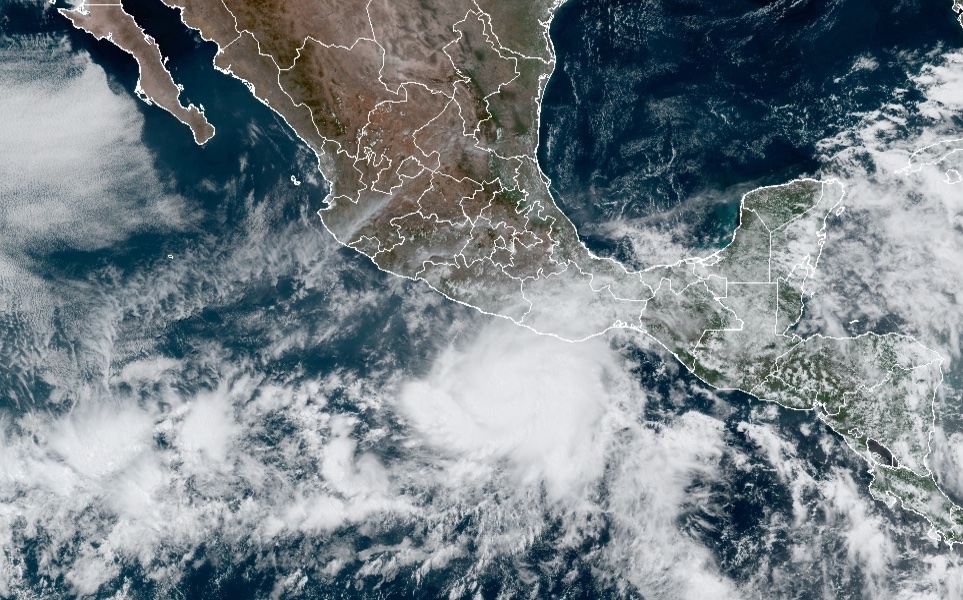
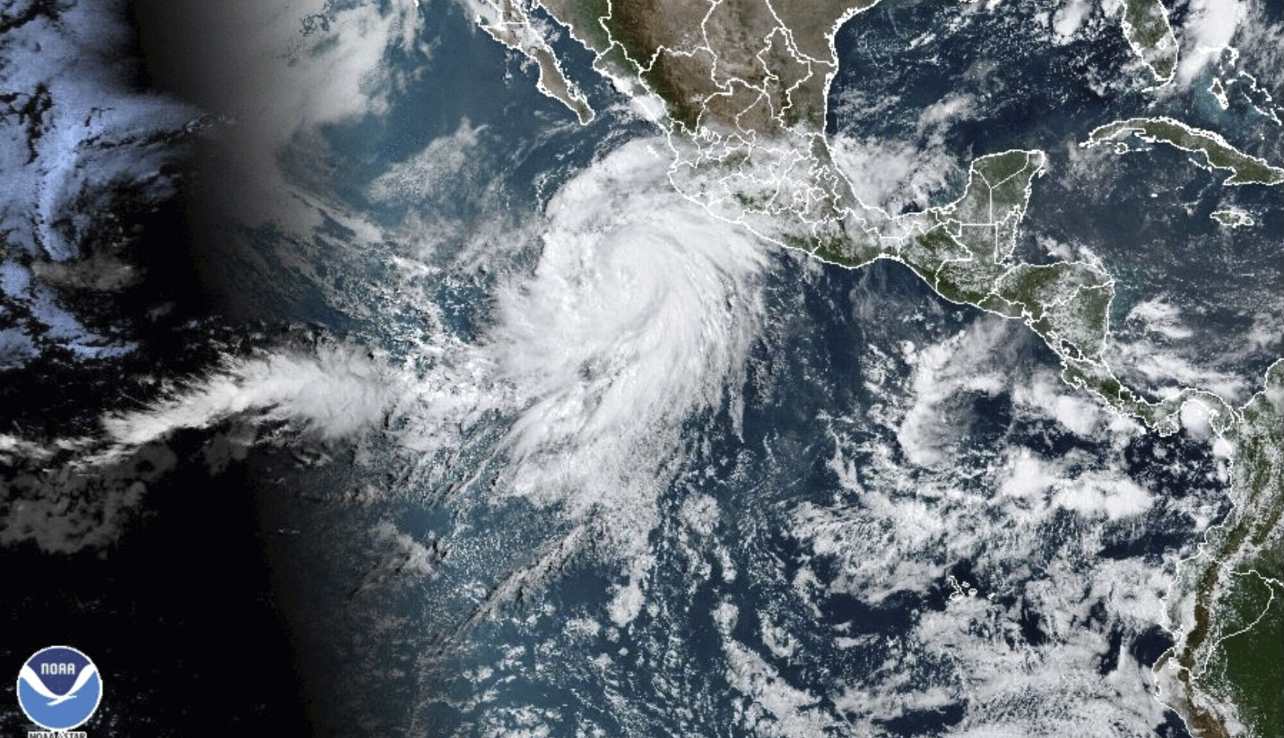
Ileana became the season’s ninth named storm on the evening of August 27th some six hours after emerging as a tropical depression. Forming approximately 330 miles to the southwest of Manzanillo, Mexico, or about 530 miles to the south-southeast of Baja California, the storm was no threat to land, but gradually strengthened to become the seventh hurricane of the season.

The storm peaked in intensity on Thursday when it strengthened to have 85 mile per hour winds. However, like most systems in the East Pacific, Ileana began to encounter cooler waters, and has gradually weakened to below minimal hurricane strength with winds of 70 miles per hour. According to the most recent advisory on the storm, Ileana is forecast to weaken to a tropical depression sometime this weekend.

So far this season, the Eastern Pacific has had 9 named storms, 7 hurricanes, and 3 major hurricanes. Meanwhile, the Atlantic has had 12 named storms, 5 hurricanes, and no major hurricanes. A major hurricane is one that has maximum sustained winds of at least 111 miles per hour, or minimal Category Three strength on the Saffir-Simpson Scale. Despite early season forecasts indicating that an El Nino would develop making conditions for favorable for development in the Eastern Pacific, and less favorable in the Atlantic, the two basins have had exact opposite seasons.

08.17.12

Say Adios To Hector

Posted in Commentary, Eastern Pacific at 11:09 am by gmachos

Last Advisory Issued On East Pacific Storm That Was Formerly Ernesto

Activity is quieting down in the Eastern Pacific on this Friday morning. There are no active tropical systems, or any new disturbances throughout the basin. The latest storm, Hector, weakened to a depression on Wednesday, and then became a remnant low early Friday morning. The storm, which was the eighth this season in the EPAC, was formerly Hurricane Ernesto when it was in the Atlantic theater last week. After emerging on the Pacific side of Mexico, the storm was not able to really gain any momentum.

Peak winds with Hector reached 45 miles per hour on a couple of occasions. The storm passed to the south of Socorro Island in the Eastern Pacific and then passed very close to Clarion Island. Hector had been a tropical storm for the better part of four days before weakening to a depression on Wednesday afternoon. The combination of wind shear and cooler sea surface temperatures helped bring about the storm’s demise. With Hector gone, the Eastern Pacific has had eight named storms with six of those becoming hurricanes. Two of those hurricanes became major storms. Hector broke a string of six straight hurricanes in the EPAC this season.

08.12.12

Tracking The Tropics–August 12, 2012

Posted in Storm Track, Commentary, Eastern Pacific, Tracking the Tropics at 6:54 pm by gmachos

Ernesto Re-Emerges In East Pacific As Hector; GFS Runs Showing TD #7 Becoming Problem For Gulf Next Weekend

The tropics continue to percolate with activity in both the Atlantic and Eastern Pacific on this Sunday afternoon.  What was left of Ernesto made it to the Eastern Pacific, and reconstituted itself as a tropical depression that was later classified as Tropical Storm Hector.  The storm, which regained depression status late Saturday morning.

Ten hours later, Hector emerged as the eighth named storm of the 2012 Eastern Pacific Season.  The EPAC, which had recently endured a bit of a dry spell in activity for three weeks, made a bit of a comeback with the development of Hurricane Gilma late last week, and now Hector.  The Eastern Pacific has had six straight hurricanes develop prior to Hector, but this latest storm is not forecast to become a hurricane according to the latest forecast discussion from the National Hurricane Center.

Meanwhile, over in the Atlantic, there was Tropical Depression #7 later in the week and into the early part of Saturday.  However, Hurricane Hunter aircraft, which flew into the storm, found that there was no closed circulation with the system, and reclassified it as an open wave.  The latest Tropical Weather Outlook indicates only a 10 percent chance of regeneration into a tropical cyclone over the next two days.  Upper level winds aren’t favorable for development in the area of the Caribbean that the wave is currently in right now.

Further to the east in the Central Atlantic, some 800 miles to the West-Northwest of the Cape Verde Islands, there has been another disturbance moving west-northwestward at 20 miles per hour.  Shower activity has been limited with this disturbance, and development will be slow.  Sea surface temperatures in the Central and Eastern Atlantic aren’t quite there yet for tropical depressions, storms, and hurricanes to develop.

Looking ahead though, the latest GFS model runs are indicating that what is left of TD #7 will progress across the Caribbean and eventually get into the Gulf of Mexico later in the week.  The model indicates that the storm will intensify to some extent in the Gulf and make an impact somewhere along the Gulf Coast from Brownsville, Texas to the Alabama and Mississippi border by this time next Sunday.  The later model runs had a weaker, but still significant system making landfall near New Orleans and the Mississippi and Alabama coasts.

Another feature that the later runs of the GFS develops around the time of August 27th and August 28th is a significant storm in the Western Atlantic to the north of the islands.  This system is vast and deep by 384 hours.  Keep in mind though that runs of the GFS mid-week last week indicated a significant storm for the East Coast around August 20th to August 22nd, and now it is indicating a significant feature in the Gulf during the same time frame.

One thing that the model has been consistently pointing out is increased moisture in the eastern half of the United States, which needs the rain.  A significant percentage of the annual corn crop in the Midwest has taken a big hit from the historic drought there, and that is going to impact the price of many things that we buy in the stores.  Recently, The National Weather Service had indicated above average precipitation this month in many areas impacted by the drought.

08.08.12

Gilma Fires Up In Eastern Pacific

Posted in Storm Track, Commentary, Eastern Pacific, Tracking the Tropics at 9:08 pm by gmachos

Strong Tropical Storm Just Below Hurricane Strength

The Atlantic Basin was not the only one that was quiet recently. The Eastern Pacific theater was also dormant. For a period of 21 days from the last advisory on Hurricane Fabio to the first advisory on Tropical Storm Gilma, there was no real activity, which is somewhat unusual considering more was expected in the EPAC this year. The Atlantic had been quiet for 34 days before Ernesto stirred up this time last week.

Nevertheless, Gilma is now the story in the Eastern Pacific although there is another area of disturbed weather to the east of our tropical storm, and the National Hurricane Center gives it about a 30 percent chance of becoming a tropical cyclone of some sort within the next 48 hours. Gilma emerged on Tuesday, and rapidly developed into a strong tropical storm that has been on the cusp of hurricane strength for much of the day on Wednesday.

Currently, Gilma is located some 695 miles to the Southwest of the tip of Baja California in Western Mexico. Maximum sustained winds are at 70 miles per hour with gusts in excess of 75 knots or 85 miles per hour. Barometric pressure in the center of circulation is estimated to be 989 millibars or 29.21 inches of Hg (Mercury). The storm is moving to the West-Northwest at 10 miles per hour, and it is not a threat to any land masses at this time. So, no watches or warnings are in effect.

Looking at the 5:00 PM Forecast Discussion from the NHC, the satellite representation of the storm has been the subject of slightly differing opinions. One camp has the estimated intensity at 65 knots while the other has it at 55 knots. So, the NHC made a compromise between the two with its current strength at 60 knots or 70 miles per hour. The intensity forecast is calling for Gilma to strengthen to a hurricane, but not much stronger than a minimal one of 75 miles per hour. Sea surface temperatures are expected to get progressively colder as the storm moves further west with time.

Forecast track has it continuing slowly westward and curving more northward over the next three to five days. With the development of Gilma, there have been seven named storms in the Eastern Pacific. Five of them so far have been hurricanes, and we could have a sixth with Gilma. Of those five hurricanes to date, two of them (Bud and Emilia) became major hurricanes of Category Three strength.

Meanwhile, on the Atlantic Basin activity scoreboard, there have been six named storms and two of them have become hurricanes. None of the hurricanes have been major with Ernesto being the strongest to date with 85 mile per hour winds at peak. Both basins have not had a depression that hasn’t become a tropical storm. The Atlantic has been the most active over the past week with two storms forming.

06.29.12

Hurricaneville’s Tracking The Tropics–June 29, 2012

Posted in Eastern Pacific, Central Pacific, Tracking the Tropics at 11:52 pm by gmachos

The June 29, 2012 edition of Hurricaneville’s Tracking The Tropics report covers activity in the Atlantic, Eastern Pacific, and Central Pacifc. Topics discussed include three disturbances being monitored in the Atlantic for development, and featured articles in the Hurricaneville Blogosphere.

Three Disturbances Being Watched In Atlantic

Posted in Eastern Pacific, Tracking the Tropics at 10:38 pm by gmachos

Chances For Development Within The Next 48 Hours Are At Best 20 Percent

We continue to watch activity around the Atlantic on this Friday night, and while there are things stirring about, none of them show signs of tropical formation over the next couple days.

First, we take a look out into the Western Atlantic well east of the United States Eastern Seaboard. The remnants of what was Tropical Storm Debby is still hanging around. Fortunately, it is in cooler water, and despite having gale force winds in the southeastern quadrant, Debby’s remnants have not been able to generate any significant shower or thunderstorm activity. Chances for development over the next 48 hours are only 10 percent.

Next, we travel southwestward across Florida and the Southeastern United States to the Western Gulf of Mexico. If you recall in my Tracking the Tropics report on Wednesday, there was an area of disturbed weather in the Bay of Campeche region of the Gulf. The disturbance had just pushed out from Southeastern Mexico. Over the last two days, shower and thunderstorm development has increased with this disturbance. However, the NHC indicates that pressures are too high in this region. Also, it is important to note that the disturbance is getting fairly close to land. Chances for development in the next 48 hours are only 10 percent.

Finally, we take a trip to the Central Atlantic some 800 miles to the East of the Windward Islands to take a look at the tropical wave that has been heading westward toward the Lesser Antilles these past couple days. When we left it on Wednesday, there was not much in the way of showers and storms associated with it. Since that time, it has become much better organized. Still, conditions are a bit hostile to development right now, so tropical formation will be slow to occur according to the NHC. Chances for development in the next 48 hours are only 20 percent.

Moving on to the Eastern Pacific, we have a lot less activity than we did two days ago when no tropical development was expected. There are some clouds and showers to the south of Costa Rica and Panama as well as some well to the southwest of the Mexican West Coast. No development is expected over the next 48 hours. Lastly, a look at the Central Pacific. Water temperatures in this region, especially around Hawaii, are usually too cold to support development. Occasionally, a storm will develop in this region or move in from the Eastern Pacific, and make a run for Hawaii.

With that said, we have several areas of thin cloudiness around the Hawaiian Island chain this evening. Much of the convection is well off to the south along the Intertropical Convergence Zone (ITCZ). No chances for development at this time.

06.27.12

Hurricaneville’s Tracking The Tropics–June 27, 2012

Posted in Storm Track, Eastern Pacific, YouTube Videos, Hurricaneville Video Report, Tracking the Tropics at 2:52 pm by gmachos

Here is an installment of Tracking The Tropics for Wednesday, June 27, 2012. Discussion includes tropical climatology for the month of June, latest news on Tropical Depression Debby, a disturbance in the Central Atlantic, what’s going on in the Eastern Pacific, and total number of storms to date in both Atlantic and EPAC.

06.15.12

Carlotta Becomes Hurricane In Eastern Pacific

Posted in Eastern Pacific at 12:33 pm by gmachos

Third Named Storm In EPAC Becomes 2012’s First Hurricane

The Eastern Pacific Hurricane Season always seems to get off to a fast start. Thanks to a start that comes two weeks before the Atlantic season gets underway, the EPAC doesn’t have take long to get named storms up on the board. So far this season, there have already been three including the latest, Carlotta, which just became the first hurricane in 2012.

As of the 11:00 AM EDT, or 8:00 AM PDT Advisory from the National Hurricane Center in Miami, Florida, Carlotta was located approximately 120 miles South-Southeast of Puerto Angel, Mexico, or about 330 miles Southeast of Acapulco, Mexico. Maximum sustained winds are estimated at 80 miles per hour with gusts in upwards of 100 miles per hour. Barometric pressure is estimated to be at 985 millibars, or 29.09 inches of Hg. Carlotta is a Category One Hurricane on the Saffir-Simpson Scale.

The storm is currently moving to the Northwest at 12 miles per hour. A Hurricane Warning is in effect for the Pacific Coast of Mexico from Salina Cruz to Acapulco. A Hurricane Watch is in effect for two parts of the Pacific Coast of Mexico. One watch extends east of Salina Cruz to Barra De Tonala while the other extends from west of Acapulco to Tecpan De Galeana. Interests along the Mexican Coast from west of Tecpan De Galeana to Cabo Corrientes should closely monitor the progress of this storm.

Looking at the latest forecast discussion from the NHC, the storm has become much better organized with a well defined central dense overcast, and a newly formed eyewall. Carlotta also has good outflow. The discussion goes on further to say that Carlotta is in a rapid intensification phase, and should be at least a Category Two Hurricane by the time it approaches the West Coast of Mexico. It is very possible that we could have our first major hurricane of 2012 as well.

Moving on to the forecast track, the guidance has shifted more to the north with Carlotta. A mid-level ridge east of the hurricane is expected to keep pushing the storm to the Northwest. A ridge is then forecast to build to the north of Carlotta, and that will turn the storm more toward the west after 24 hours.

Atlantic and Eastern Pacific Off To Fast Starts In 2012

Posted in Commentary, Storm Facts, Eastern Pacific at 11:52 am by gmachos

Both Basins Churn Up Storms Prior To June 1st

Seasonal Forecasts indicated an average year in the Eastern Pacific, and a relatively quiet year by recent standards in the Atlantic. However, things have not gone according to plan over the first month of the EASTPAC season and the first two weeks of the Atlantic season.

As of Friday morning, the Eastern Pacific had three named storms including the latest in Carlotta, which has become the season’s first hurricane. More activity is also expected as a monsoon pattern has developed in the tropical waters south of Mexico. Some of this activity could cross into the Western Caribbean region of the Atlantic next week.

Speaking of the Atlantic, the season had not even started two weeks ago, and there were already two named storms. Both Alberto and Beryl formed off the Southeastern Coast with Beryl causing the most trouble by bringing some six or so inches of rain to Northeastern Florida, Georgia, and South Carolina before heading out to sea. Beryl was the closest of the two storms to becoming the season’s first hurricane with 65 mile per hour winds.

Climatologically speaking, it is very rare for a tropical storm to stir up in the Atlantic before June 1st, but it has happened. Back in April 2003, Tropical Storm Ana formed on Easter Weekend. Then, in May 2007, Subtropical Storm Andrea developed. On average, there have been pre-season storms every 6.5 years. More trouble could be on the way as well.

The monsoonal pattern that has developed near the ITCZ south of Mexico is expected to push into the Atlantic Basin by the middle of next week. Models indicate that a disturbance could flare up within the next 10 days in the Western Caribbean, which is the prime area for tropical formation in the Atlantic this time of year. On average, a tropical storm forms in the month of June once every two years or so. The most powerful storm was Hurricane Audrey back in 1957 while the most costly was Tropical Storm Allison in 2001.

In 2011, the first named storm, Arlene, didn’t form until the very end of June (June 28th). The first hurricane didn’t develop until late August (Arlene). There were 19 depressions, 18 named storms, 6 hurricanes, and 3 major hurricanes. Meanwhile, in the Eastern Pacific, there were 13 depressions, 11 named storms, 9 hurricanes, and 5 major hurricanes.

05.11.12

Eastern Pacific Season Five Days Away

Posted in Storm Preparation, Eastern Pacific at 2:36 pm by gmachos

La Niņa Conditions Subsiding To ENSO Neutral Could Bring More Storms

Hurricane Season in the Northern Hemisphere is approaching. The Atlantic Hurricane Season is now less than a month away, and the Eastern Pacific Season is going to be starting up in five days. While both seasons end on November 30th, the Eastern Pacific gets a two week jump on the Atlantic. The earlier start in the Eastern Pacific is based upon data collected on these storms since 1949. About 90 percent of storms in both the EPAC and Atlantic occur between the start and end dates for their seasons.

On average, the Eastern Pacific gets about 16 named storms per season. Of those 16 named storms, about 9 of them become hurricanes, and four of those intensify to major hurricane status. The Eastern Pacific Basin is the second most active basin in the world next to the Western Pacific. Originally, before the era of satellites, the Atlantic was thought of as the second most active basin, but forecasters were proven wrong once they were able to get another set of eyes in space.

Extremes for this region have been a maximum of 28 named storms, 16 hurricanes, and 10 major hurricanes while there has been a minimum of 8 named storms, 3 hurricanes, and no major hurricanes. A very important variable in the Eastern Pacific Hurricane Season forecast is the presence of either El Niņo or La Niņa. These phenomena have become very important ingredients in our global climate. El Niņo occurs when sea surface temperatures in the Eastern Pacific are warmer than average. This climate shift usually coincides with Christmas time in South America, and that was why it was first called El Niņo by Peruvian fishermen.

La Niņa is when the opposite happens. Cooler than normal sea surface temperatures in the Eastern Pacific. When there is an El Niņo that usually means a very active hurricane season in the EPAC. During La Niņa, the Atlantic is usually busy. Why is that? Hurricanes thrive in warm water where the temperature is 80 degrees fahrenheit or better. Warm water is where these storms get their fuel. So, when an El Nino occurs, the sea surface temperatures are heated up to become very favorable for Eastern Pacific storms. The development of more storms in the EPAC then creates more of a shearing environment at the upper levels in the Atlantic, which inhibits Atlantic storms.

Conversely, the cooler water hinders storm development in the Eastern Pacific. The fewer EPAC storms, the less turbulence and wind shear in the upper levels of the atmosphere in the Altantic. As a result, Atlantic Hurricanes have less barriers to their development. With all of that said, the current state of the climate in the Eastern Pacific is in transition from La Niņa to ENSO neutral. So, sea surface temperatures there are expected to be more normal during hurricane season. As a result, we could see a bit more activity than in recent years.

Historically, storms in the Eastern Pacific do not make direct impacts in the United States as hurricanes. There are exceptions though such as the 1858 San Diego Hurricane, and the 1939 Long Beach storm. The reason for this is because once you get north of Baja California in Mexico, the water temperatures are much cooler, and hinder the development of hurricanes. An example of this was in 1997 when Hurricane Linda became a monster Category Five storm in the Eastern Pacific. Back then, there was talk of the storm impacting Southern California, and there was file footage of the 1939 storm on television. However, the storm dissipated well to the South of San Diego.

Impacts from Eastern Pacific storms in the United States is usually in the form of high surf along the California coast, and soaking rains for the Southwestern United States. However, arid conditions over the Desert Southwest can take the moisture out of those remnants. Hurricane Nora was an example of this, and was given the nickname, Hurricane No Rain.

« Previous entries ·